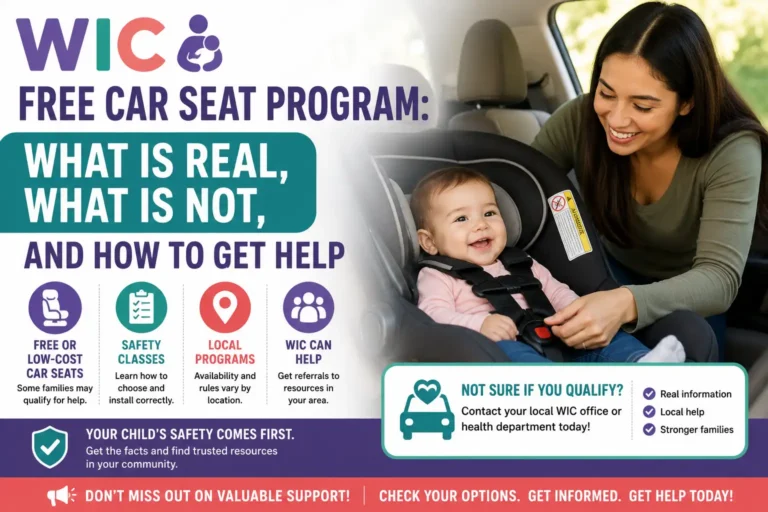
Many parents search for a WIC free car seat program because car seats are expensive and every family wants to keep a baby safe. The truth is more specific than most online posts suggest. USDA’s national WIC page says WIC provides healthy foods, breastfeeding support, personalized nutrition education, and referrals to other services. It does not list car seats as a standard national WIC benefit.
That does not mean WIC is useless for car seat help. In many places, your local WIC office can point you to car seat safety classes, county health department programs, or other community resources. Some local agencies even use WIC participation as one of the ways families qualify for free or reduced-cost seats.
Does WIC give free car seats?
Not as a national standard benefit. USDA’s WIC page lists food benefits, breastfeeding support, nutrition education, and referrals to other services. It does not describe car seats as part of the federal WIC package.
The more accurate answer is this: some local programs connected to WIC may provide car seats, classes, or referrals. A North Dakota health district says families may qualify for a free car seat if they are enrolled in programs like WIC, TANF, or Medicaid. A Utah health department says its free car seat class may lead to a free or reduced-cost seat for qualifying residents.
What WIC can help with
WIC offices do help families with related support. Michigan’s Macomb County health department says WIC can help with food, breastfeeding, health insurance navigation, housing, car seat safety, and more. That is the kind of support many families are actually finding when they ask about a “WIC car seat program.”
So the best way to think about it is this: WIC may not hand you a car seat at the counter, but it can help connect you to the program that does. That is a local, county-by-county process, not a single national offer. This is an inference based on the official USDA WIC page and the local health department examples.
How the local car seat programs usually work
Most real car seat programs do not give away a seat with no steps at all. They usually require a class, an appointment, or an inspection. In Weber and Morgan counties, Utah, the health department runs a car seat class that is about two hours long, followed by an installation or check in your vehicle. The page says participants may receive a new seat for free or buy one at a reduced cost.
North Dakota’s City-County Health District says it offers car seat checkup events, installation by appointment, and free car seats for families who qualify. It also says staff will check whether the seat is recalled, meets federal standards, fits the child, and is installed properly.
That means the process is usually education first, seat second. If you see a page promising a free car seat with no class, no eligibility check, and no safety review, treat it carefully. The official examples show a real program is usually more structured.
Who may qualify
Eligibility depends on the local program. One North Dakota program says families may qualify if they are enrolled in WIC, TANF, or Medicaid. Another Utah program says it verifies the child’s age, height, and weight to decide whether the family qualifies for a free or reduced-cost seat.
WIC itself is available to pregnant women, recently pregnant or breastfeeding women, infants, and children under 5, and caregivers such as dads, grandparents, and foster parents may apply for children in their care. If you are eligible for WIC, that may help you qualify for a related local seat program, but it still does not mean the federal WIC office is giving out car seats directly.
How to get a free car seat through WIC-related help
Start with your local WIC office and ask one direct question: Do you know of any local car seat safety classes or child passenger safety programs that accept WIC families? USDA says local WIC offices are where benefits are applied for and received, and local WIC agencies also provide referrals to other services.
Then contact your county or city health department. The Utah and North Dakota examples show that health departments often run the real car seat programs, not WIC alone. Those programs may require registration, a class, or an appointment.
Before you go, have your child’s age, height, and weight ready. One Utah health department says it uses those details to verify whether you qualify for a free or reduced-cost seat.
What to watch out for
Be careful with posts that say every WIC office gives away free car seats. That is not what USDA says. The national WIC benefit list is food, breastfeeding support, nutrition education, and referrals. Car seat help exists in some local programs, but it is not a universal WIC benefit.
Also be careful with “free car seat” pages that skip the class or safety check. Real programs usually verify eligibility and teach proper installation. That is how the Utah and North Dakota examples work.
Best answer in one line
If you need a WIC free car seat, the real path is usually WIC referral plus a local health department or safety program, not a national WIC giveaway.
FAQ
Does WIC provide car seats?
Not as a standard national WIC benefit. USDA lists foods, breastfeeding support, nutrition education, and referrals to other services.
Can WIC help with car seats?
Yes, in some local areas WIC offices help families find car seat safety programs or qualify for related assistance.
Do you usually need a class?
Often yes. The Utah and North Dakota examples both include a class, checkup, or installation appointment.
What should I ask my WIC office?
Ask whether they know of a local car seat class, car seat voucher, or child passenger safety program in your county. USDA says WIC offices provide referrals to other services.