
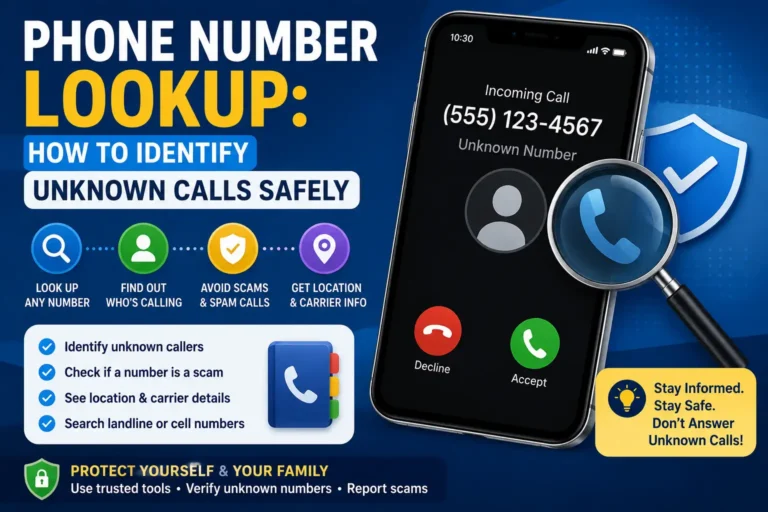
Unknown calls are more common than ever. Whether it’s a missed call from an unfamiliar number or repeated spam calls, many people want a simple way to identify who’s trying to reach them. Fortunately, several legitimate tools can help you research a phone number while protecting your privacy.
This guide explains how phone number lookup services work, when to use them, and the safest ways to identify unknown callers.
What Is a Phone Number Lookup?
A phone number lookup is a service that helps you gather publicly available information about a telephone number. Depending on the provider, you may be able to learn:
- Whether the number belongs to a business
- The carrier that issued the number
- The city or state associated with the area code
- Whether the number has been reported as spam
- Publicly available owner information (when legally available)
Many people use these services after receiving suspicious calls or text messages.
How Does Reverse Phone Lookup Work?
Unlike a traditional directory where you search for a person’s number by name, a reverse lookup starts with the phone number itself.
You simply enter the number into a trusted lookup service, and the platform searches public records and available databases to identify any matching information.
Results vary depending on:
- Whether the number is public
- Privacy settings
- Mobile vs. landline numbers
- Country or region
Can You Look Up Cell Phone Numbers?
Yes, but mobile numbers are generally more private than landlines.
While some lookup services can identify mobile carriers or determine whether a number has been reported for spam, they may not always display the owner’s name.
This helps protect personal privacy.
Are Free Phone Lookup Services Available?
Yes.
Several reputable platforms offer basic searches at no cost. Free services may provide:
- Carrier information
- General location
- Spam reports
- Business identification
- Area code details
More detailed reports sometimes require a paid subscription.
Why Would You Search an Unknown Number?
People commonly perform number searches when they:
- Miss an unfamiliar call
- Receive suspicious text messages
- Suspect scam activity
- Verify a business contact
- Confirm customer service numbers
- Identify repeated robocalls
A quick search can help you decide whether it’s safe to return the call.
Can You Find Out Who Called You?
Sometimes.
If the caller is a business or the number is publicly listed, lookup services may identify the caller.
Private individuals, however, often remain protected due to privacy laws.
Best Ways to Identify Unknown Callers
Several trusted resources can help identify unfamiliar numbers.
Popular options include:
- Caller identification apps
- Public business directories
- Official company websites
- Carrier verification tools
- Spam reporting communities
Always compare information from multiple reliable sources before assuming a caller’s identity.
Can Google Identify a Phone Number?
Sometimes.
Searching a number on Google may display:
- Business listings
- Public websites
- Customer reviews
- Scam reports
- Forum discussions
If the number belongs to a legitimate company, Google often provides useful information.
What Is a Carrier Lookup?
Carrier lookup tools identify which telephone company originally issued a phone number.
These tools are commonly used by:
- Businesses
- Customer service teams
- Developers
- Telecommunications companies
Carrier information does not necessarily identify the current owner.
Can You Search by Area Code?
Yes.
Area code searches can help determine:
- State
- City
- Region
- Time zone
This information is useful when deciding whether to answer an unfamiliar call.
How to Tell If a Phone Number Is a Scam
No lookup tool can guarantee whether a caller is legitimate, but several warning signs may indicate fraud.
Be cautious if the caller:
- Demands immediate payment
- Requests gift cards
- Asks for banking information
- Threatens legal action
- Pretends to represent the IRS or government agencies
- Refuses to provide written information
If something feels suspicious, hang up and contact the organization directly using its official website.
Tips for Staying Safe
To protect yourself from phone scams:
- Never share passwords or verification codes.
- Avoid returning suspicious missed calls.
- Block unwanted numbers.
- Report scam calls to your carrier.
- Use spam call filtering when available.
- Verify businesses through official websites.
Can You Identify Business Numbers?
Yes.
Business phone numbers are often easier to identify because they’re listed publicly.
Lookup results may include:
- Business name
- Address
- Website
- Customer reviews
- Hours of operation
Always verify that you’re calling the official number listed on the company’s website.
Limitations of Phone Lookup Services
Phone lookup tools are helpful, but they have limits.
They may not identify:
- Private mobile numbers
- Recently activated numbers
- Numbers protected by privacy laws
- Internet-based calling services
Incomplete results don’t necessarily mean the caller is suspicious.
Frequently Asked Questions
Is reverse phone lookup legal?
Yes. Searching publicly available phone information is generally legal when used for lawful purposes.
Can I identify every unknown caller?
No. Many mobile numbers remain private and may not display ownership information.
Are free phone lookup websites accurate?
Some are accurate for basic information, but results vary by provider and available public records.
Can I find someone’s address using their phone number?
Most reputable lookup services do not provide private residential information without proper authorization.
Should I trust every phone lookup result?
No. Always verify important information using multiple reliable sources.
Final Thoughts
A phone number lookup can help you identify unknown callers, avoid spam, and verify legitimate businesses. Whether you’re checking a missed call, researching a suspicious text, or confirming a customer service number, using trusted lookup tools can save time and improve your safety.
Remember that no service is perfect, and privacy laws limit the information available for many personal numbers. When in doubt, avoid sharing sensitive information and contact organizations directly through their official websites rather than relying solely on an incoming call.