
Meta Title: Nursing Facilities That Accept Medicaid | Find Medicaid Nursing Homes
Meta Description: Looking for nursing facilities that accept Medicaid? Learn how Medicaid nursing home coverage works, how to find participating facilities, what services are covered, and what to ask before choosing a nursing facility.
Nursing Facilities That Accept Medicaid
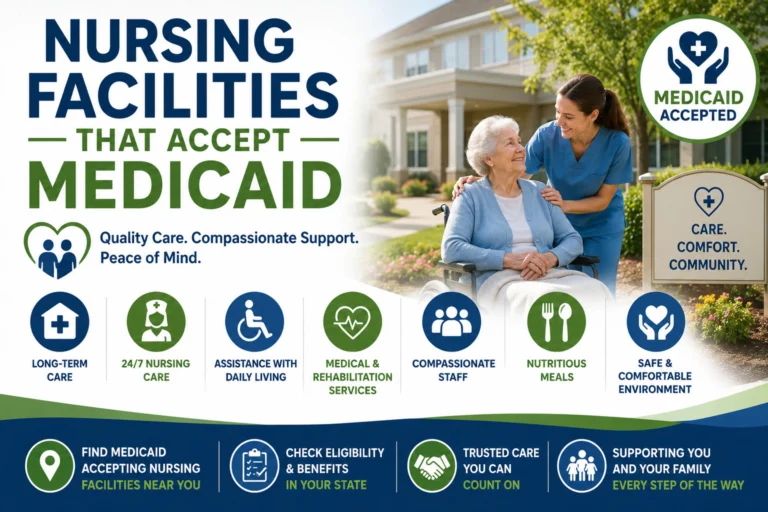
Finding nursing facilities that accept Medicaid can be an important step for families looking for affordable long-term care. Medicaid is a major source of coverage for nursing facility services in the United States, but eligibility requirements, covered services, and facility participation can vary by state.
Medicaid nursing facility services are provided by nursing homes that are licensed and certified by the state as Medicaid nursing facilities.
Whether you are looking for skilled nursing care, rehabilitation, or long-term residential care, it is important to confirm that the facility accepts your specific Medicaid coverage before making a decision.
This guide explains how Medicaid nursing home coverage works, how to find participating facilities, and what to consider when choosing a nursing facility.
What Is a Nursing Facility?
A nursing facility, often called a nursing home, provides residential care for people who need ongoing nursing or medical assistance.
Depending on the facility and resident’s needs, services may include:
- 24-hour nursing care
- Assistance with daily activities
- Medication management
- Rehabilitation
- Physical therapy
- Occupational therapy
- Medical care
- Dietary services
- Personal hygiene assistance
- Social services
- Recreational activities
- Long-term residential care
Medicaid-certified nursing facilities must provide or arrange for nursing and related services, specialized rehabilitative services, medically related social services, pharmaceutical services, dietary services, and other required care.
Does Medicaid Pay for Nursing Home Care?
Yes. Nursing facility services are a mandatory Medicaid benefit under federal Medicaid law, although eligibility and specific program requirements are determined through federal and state rules.
Medicaid can help pay for nursing facility care when an individual:
- Is eligible for Medicaid
- Meets the state’s requirements for nursing facility level of care
- Receives care from a Medicaid-certified nursing facility
- Meets applicable financial and other eligibility requirements
Medicaid.gov explains that nursing facility coverage is available only when services are provided by a nursing home licensed and certified as a Medicaid Nursing Facility.
What Does Medicaid Nursing Home Coverage Include?
The exact benefits can vary by state, but Medicaid-certified nursing facilities generally provide required services as part of the Medicaid nursing facility benefit.
These may include:
Nursing and Medical Care
Residents can receive nursing and related services appropriate to their medical needs.
Rehabilitation Services
Facilities may provide or arrange for rehabilitation services when medically necessary, including specialized rehabilitative services.
Medication Services
Medicaid-certified facilities must provide pharmaceutical services according to applicable requirements.
Dietary Services
Nursing facilities provide meals and dietary services appropriate to residents’ needs.
Personal Care
Residents may receive assistance with personal hygiene and other daily-care needs included within the facility’s covered services.
Social Services
Medically related social services are among the services that Medicaid-certified nursing facilities are required to provide or arrange.
How to Find Nursing Facilities That Accept Medicaid
If you are searching for “nursing facilities that accept Medicaid,” there are several ways to find potential options.
1. Contact Your State Medicaid Agency
Start with your state’s Medicaid program.
Ask for a list of Medicaid-certified nursing facilities in your area.
You can provide:
- Your ZIP code
- Preferred city
- Required level of care
- Preferred distance from family
- Any special care requirements
Your state Medicaid agency can explain eligibility and coverage requirements.
2. Use Medicare’s Nursing Home Care Resources
The federal government provides online resources for comparing nursing homes and researching facility information.
You can use these resources to investigate facilities, quality information, inspection results, and other details.
3. Ask Your Medicaid Health Plan
If you receive Medicaid through a managed care plan, contact the member services department.
Ask:
“Which nursing facilities near me participate in my Medicaid plan?”
Also ask whether the facility must be approved or authorized by your plan before admission.
4. Contact Nursing Facilities Directly
Call each facility before making an appointment or arranging admission.
Ask:
- Do you accept Medicaid?
- Are you currently accepting Medicaid residents?
- Are you accepting new residents?
- Do you have availability?
- What level of care do you provide?
- Do you provide rehabilitation?
- Is there a waiting list?
- What services are included?
- Are there services that cost extra?
Medicaid Nursing Facility vs. Medicare Skilled Nursing Facility
Medicaid and Medicare are different programs, and they can pay for different types of care.
Medicare may cover certain short-term skilled nursing facility services when eligibility and coverage requirements are met.
Medicaid can cover qualifying nursing facility care for eligible individuals, including long-term care.
Medicaid.gov notes that Medicaid can cover nursing facility care beyond periods of Medicare-covered skilled nursing care when the individual is eligible and the facility is Medicaid-certified.
Someone who has both Medicare and Medicaid may have both programs involved in paying for healthcare.
Who Qualifies for Medicaid Nursing Facility Care?
Eligibility varies by state, but individuals generally need to meet Medicaid eligibility rules and the state’s requirements for nursing facility level of care.
A state may evaluate:
- Income
- Assets and resources
- Medical needs
- Functional limitations
- Level of care
- Citizenship or qualified immigration requirements
- Other Medicaid eligibility factors
Because Medicaid rules differ from state to state, contact your state Medicaid agency for an individualized eligibility determination.
What Is Nursing Facility Level of Care?
Nursing facility level of care generally refers to the amount and type of assistance a person needs because of a medical or physical condition.
States establish their own nursing facility level-of-care criteria within federal requirements.
A person may need help with:
- Bathing
- Dressing
- Eating
- Moving
- Toileting
- Medication management
- Medical monitoring
- Other daily activities
A healthcare professional or state assessment process may be used to determine whether nursing facility care is appropriate.
What to Look for in a Medicaid Nursing Facility
Accepting Medicaid is important, but it should not be the only factor you consider.
Look at:
Location
Choose a facility that is reasonably convenient for family members and caregivers to visit.
Staffing
Ask about nursing staff, aides, therapists, and other healthcare professionals.
Cleanliness
During a visit, observe the cleanliness of resident rooms, common areas, dining spaces, and bathrooms.
Activities
Ask about recreational and social activities available to residents.
Food and Nutrition
Ask how meals are planned and whether special diets are accommodated.
Medical Services
Find out how medical care is coordinated and how emergencies are handled.
Rehabilitation
If rehabilitation is needed, ask whether physical, occupational, or speech therapy is available.
Visiting Policies
Ask about visiting hours and current facility policies.
Questions to Ask a Medicaid Nursing Facility
Before choosing a facility, consider asking:
- Do you accept Medicaid?
- Are you currently accepting Medicaid residents?
- Is the facility Medicaid-certified?
- Do you have a waiting list?
- What level of care do you provide?
- What services are included in the Medicaid rate?
- Are there additional charges?
- How are medications handled?
- Is rehabilitation available?
- How often does a physician visit residents?
- How are emergencies handled?
- What are the visiting policies?
- Can family members participate in care planning?
- What happens if a resident’s medical needs change?
Taking notes during facility visits can make it easier to compare your options.
What Services May Cost Extra?
Medicaid-covered nursing facility services are subject to federal and state rules, but residents may be responsible for certain items or optional services.
Federal Medicaid guidance identifies examples that facilities may charge residents for, including:
- Private rooms when not medically necessary
- Telephone or television
- Personal clothing
- Personal comfort items
- Certain cosmetic or grooming services
- Flowers and plants
- Gifts
- Special foods beyond those generally provided
- Certain services not included in the Medicaid payment
Always ask the facility for a written explanation of any potential charges.
What Happens When Someone Moves From Private Pay to Medicaid?
Some nursing home residents initially pay privately and later become eligible for Medicaid.
If the nursing facility is Medicaid-certified and the resident becomes eligible, it may be possible for the resident to remain in the same facility under the Medicaid nursing facility benefit.
However, the resident must meet applicable Medicaid eligibility and nursing facility requirements.
Families should discuss the transition with:
- The nursing facility’s financial office
- The state Medicaid agency
- A Medicaid eligibility specialist
- A qualified elder-law professional when appropriate
Medicaid and a Spouse Living at Home
Medicaid has special rules designed to protect certain income and resources for a spouse who continues living in the community.
Federal spousal impoverishment provisions can protect certain resources and income for the spouse who remains at home, subject to applicable rules.
Because these calculations can be complicated, couples should seek individualized advice from their state Medicaid agency or an appropriately qualified professional.
What About Medicaid Estate Recovery?
Families should also understand Medicaid estate recovery.
Federal Medicaid rules require states to seek recovery for certain Medicaid benefits paid for individuals age 55 and older, including nursing facility services and certain related services, subject to exceptions and state-specific rules.
Estate recovery rules can be complicated, particularly when a spouse or certain children are involved.
Before making major financial decisions, consider discussing the situation with your state Medicaid agency or an elder-law attorney.
Alternatives to Nursing Facilities
A nursing home is not always the only option for someone who needs long-term care.
Depending on eligibility and availability, alternatives may include:
- Home and community-based services
- Home health care
- Personal care services
- Adult day programs
- Assisted living in programs that cover it
- PACE programs
- Family caregiving with professional support
For example, PACE (Program of All-Inclusive Care for the Elderly) provides comprehensive medical and social services to certain eligible older adults who meet nursing-home-level requirements but can safely live in the community.
What If You Can’t Find a Medicaid Nursing Facility Nearby?
If nearby facilities are full or do not accept Medicaid, consider:
- Contacting your state Medicaid agency
- Asking your Medicaid health plan for participating facilities
- Searching surrounding communities
- Asking a hospital discharge planner for assistance
- Contacting local aging agencies
- Asking about waiting lists
- Checking whether home-based care is available
Do not assume that one facility’s lack of availability means Medicaid cannot help pay for nursing care.
Frequently Asked Questions
Do nursing facilities accept Medicaid?
Many nursing facilities participate in Medicaid, but not every facility does. Medicaid nursing facility services must generally be provided by a nursing home licensed and certified as a Medicaid nursing facility.
Does Medicaid pay for long-term nursing home care?
Yes. Medicaid can cover qualifying long-term nursing facility services for eligible individuals who meet applicable state requirements.
How do I find a Medicaid nursing home near me?
Contact your state Medicaid agency, use government nursing home resources, check your Medicaid plan’s provider information, and call facilities directly to verify participation.
Can I stay in my current nursing home after getting Medicaid?
In many cases, yes, if the nursing home is Medicaid-certified and you meet Medicaid eligibility requirements.
Does Medicaid cover room and board in a nursing facility?
Nursing facility Medicaid benefits are comprehensive and include room and board as part of the institutional benefit.
Can Medicaid cover nursing care at home instead?
Depending on the state and the person’s eligibility, Medicaid may offer home and community-based services that allow eligible individuals to receive certain long-term supports outside a nursing facility.
Final Thoughts
Finding nursing facilities that accept Medicaid requires more than simply searching for a nearby nursing home. Families should confirm that the facility is Medicaid-certified, accepts the individual’s Medicaid coverage, has availability, and can provide the appropriate level of care.
Medicaid is an important source of coverage for qualifying nursing facility services, but eligibility and program rules vary by state.
Before choosing a facility, compare several options when possible, visit the facilities in person, ask about staffing and services, and get a clear explanation of any potential costs. Taking these steps can help families make a more informed decision about long-term care.