
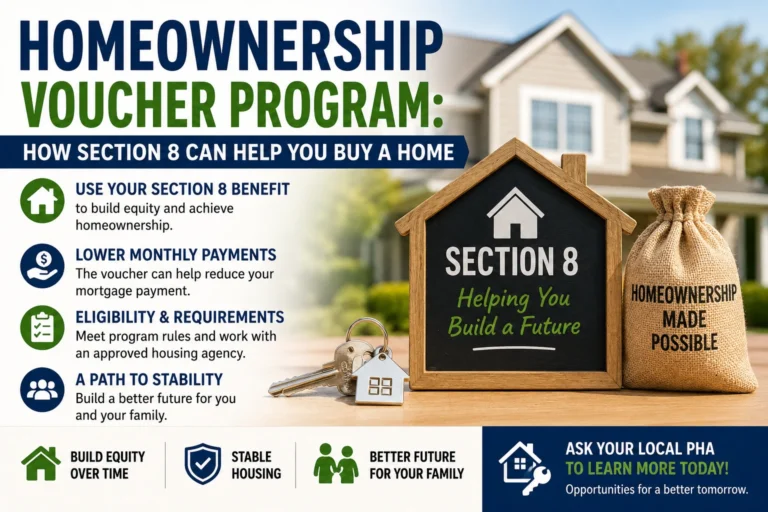
Many people believe that the Housing Choice Voucher Program, commonly known as Section 8, can only be used to pay rent. However, that’s not always the case. Through the Housing Choice Voucher Homeownership Program, some eligible families can use their housing assistance to help purchase a home instead of renting.
This program gives qualifying families the opportunity to build equity, achieve long-term housing stability, and work toward homeownership. While the program is not available through every Public Housing Agency (PHA), it has helped thousands of low-income households become homeowners.
In this guide, you’ll learn how the Homeownership Voucher Program works, who qualifies, what expenses it covers, and how to apply.
What Is the Homeownership Voucher Program?
The Housing Choice Voucher Homeownership Program is a federal housing initiative administered by the U.S. Department of Housing and Urban Development (HUD) through participating Public Housing Agencies.
Instead of using a voucher to help pay monthly rent, eligible participants can use their housing assistance toward the cost of owning a home. Monthly voucher assistance may be applied to approved homeownership expenses, making it easier for qualifying families to afford a mortgage.
Because participation is voluntary, not every Public Housing Agency offers this option. Before applying, you should contact your local housing authority to determine whether the program is available in your area.
How Does the Program Work?
Once approved, your housing voucher can help pay eligible monthly homeownership expenses rather than rent.
Depending on your situation, voucher assistance may help cover:
- Monthly mortgage payments
- Mortgage principal and interest
- Property taxes
- Homeowners insurance
- Mortgage insurance premiums
- Certain utility expenses
- Other approved housing costs
The amount of assistance depends on your household income, family size, local housing payment standards, and program rules established by your Public Housing Agency.
Benefits of the Homeownership Voucher Program
The program offers several advantages for eligible families.
Build Equity
Instead of paying rent every month, your mortgage payments help build ownership in your home over time.
Long-Term Housing Stability
Owning a home provides greater stability and reduces concerns about rising rents or lease renewals.
Affordable Monthly Payments
Housing voucher assistance can lower your monthly housing expenses, making homeownership more affordable for qualifying households.
Opportunity to Build Wealth
A home can become a long-term financial asset. As you pay down your mortgage and property values increase, you may build equity that benefits your family’s future.
Who Can Qualify?
Eligibility requirements vary slightly by Public Housing Agency, but applicants generally must meet several federal and local requirements.
You may qualify if you:
- Currently receive or are eligible for Housing Choice Voucher assistance.
- Meet minimum income requirements.
- Are purchasing a home as your primary residence.
- Complete an approved homeownership counseling course.
- Meet any local program requirements established by your Public Housing Agency.
Some families may also need to satisfy employment requirements unless they qualify for an exemption because of age or disability.
First-Time Homebuyer Requirement
Many applicants must qualify as a first-time homebuyer.
Generally, this means you have not owned a home during the previous three years.
However, certain exceptions may apply, including for:
- Single parents who previously owned a home with a former spouse.
- Displaced homemakers.
- Other situations permitted under HUD guidelines.
Your local Public Housing Agency can explain whether you meet this requirement.
Income Requirements
Applicants must meet minimum income standards established under the program.
Income requirements help ensure that families can reasonably afford the responsibilities of homeownership while receiving voucher assistance.
The required income level may vary depending on:
- Household size
- Employment status
- Disability status
- Local housing authority policies
Your Public Housing Agency will review your income during the application process.
Employment Requirements
Many applicants must demonstrate steady employment before purchasing a home.
Typically, at least one adult household member must have been employed full-time for a specified period, although exceptions may apply for elderly families or individuals with disabilities.
Be sure to ask your local housing authority about its specific employment requirements.
Home ownership Counseling
Before purchasing a home, applicants are generally required to complete a homeownership counseling program approved by the Public Housing Agency.
These classes help prepare future homeowners by covering topics such as:
- Budgeting
- Credit management
- Mortgage responsibilities
- Home maintenance
- Insurance
- Closing costs
- Preventing foreclosure
The goal is to help families make informed financial decisions and succeed as homeowners.
What T ypes of Homes Can Be Purchased?
Eligible participants may be able to purchase different types of homes, including:
- Single-family homes
- Townhouses
- Condominiums
- Manufactured homes (in some cases)
The property must meet HUD’s housing quality requirements and any additional standards established by the local Public Housing Agency.
How to Apply for the Homeownership Voucher Program
If you’re interested in using your Housing Choice Voucher to buy a home, follow these general steps.
Step 1: Contact Your Local Public Housing Agency
Not every Public Housing Agency (PHA) participates in the Homeownership Voucher Program.
Start by contacting your local housing authority and ask:
- Does your agency offer the Homeownership Voucher Program?
- What are the local eligibility requirements?
- Is funding currently available?
The agency can explain the application process and provide the necessary forms.
Step 2: Verify Your Eligibility
Your Public Housing Agency will review whether you meet the program requirements, including:
- Housing Choice Voucher eligibility.
- Income requirements.
- Employment requirements (if applicable).
- First-time homebuyer requirements.
- Family eligibility.
Additional local requirements may also apply.
Step 3: Complete Homeownership Counseling
Before purchasing a home, most applicants must complete a HUD-approved homeownership counseling course.
These classes help you understand:
- Buying a home
- Mortgage loans
- Credit management
- Budgeting
- Home maintenance
- Closing costs
- Homeowner responsibilities
Completing counseling can help you prepare for long-term homeownership.
Step 4: Find an Eligible Home
Once approved, you can begin searching for a home that meets program requirements.
The property must generally:
- Be your primary residence.
- Meet HUD housing quality standards.
- Pass any required inspections.
- Be within the area served by your Public Housing Agency.
Step 5: Secure Mortgage Financing
The Homeownership Voucher Program does not provide a mortgage.
Instead, you’ll need to qualify for a mortgage through an approved lender. Your housing voucher may then help pay eligible monthly homeownership expenses after the purchase is completed.
What Expenses Can the Voucher Help Cover?
Depending on your eligibility and local program rules, voucher assistance may help pay:
- Monthly mortgage payments.
- Mortgage principal and interest.
- Property taxes.
- Homeowners insurance.
- Mortgage insurance premiums.
- Utility expenses.
- Other approved housing costs.
The exact assistance available depends on your household income and Public Housing Agency policies.
Required Documents
While requirements vary, applicants are often asked to provide:
Identification
Examples include:
- Driver’s license
- State-issued ID
- Passport
Income Verification
Your Public Housing Agency may request:
- Recent pay stubs
- Tax returns
- W-2 forms
- Social Security benefit statements
- Pension or retirement income documents
Housing Choice Voucher Information
Current voucher participants may need to provide documentation related to their voucher assistance and household information.
Mortgage Information
After selecting a home, your lender and housing authority may request:
- Mortgage approval documents
- Purchase agreement
- Home inspection reports
- Property appraisal
- Closing information
Why Applications May Be Denied
Some applications may not be approved because:
- The local Public Housing Agency does not offer the program.
- Income requirements are not met.
- Employment requirements are not satisfied.
- The selected home does not meet HUD standards.
- Required counseling was not completed.
- Mortgage financing could not be obtained.
If your application is denied, ask your Public Housing Agency whether you may reapply or qualify in the future.
Tips for Success
To improve your chances of becoming a homeowner through the program:
- Contact your Public Housing Agency early.
- Complete all required paperwork.
- Attend homeownership counseling.
- Maintain good credit whenever possible.
- Save money for closing costs and future home maintenance.
- Work with experienced lenders and real estate professionals.
Preparing in advance can make the home-buying process much smoother.
Frequently Asked Questions
1. Can I use my Section 8 voucher to buy a house?
Yes. If your local Public Housing Agency participates in the Housing Choice Voucher Homeownership Program and you meet the eligibility requirements, your voucher may be used toward eligible homeownership expenses.
2. Does every Public Housing Agency offer this program?
No. Participation is optional, so availability depends on your local Public Housing Agency.
3. Do I still need to qualify for a mortgage?
Yes. You must obtain mortgage financing through an approved lender before purchasing a home.
4. Is the program only for first-time homebuyers?
Generally, yes, although HUD provides certain exceptions for some applicants, such as displaced homemakers and some single parents.
5. Can seniors or people with disabilities apply?
Yes. Elderly families and individuals with disabilities may qualify, and some program requirements, such as employment rules, may differ.
6. Can the voucher pay my entire mortgage?
Usually not. Voucher assistance helps with eligible housing expenses, but homeowners are generally responsible for paying any remaining costs.
7. Can I buy any home I want?
No. The home must meet HUD requirements, pass inspections, and satisfy your Public Housing Agency’s program rules.
8. Are manufactured homes eligible?
In some cases, yes. Eligibility depends on local program policies and the type of property being purchased.
9. Is homeownership counseling required?
Yes. Most participants must complete an approved homeownership counseling program before purchasing a home.
10. Where can I apply?
Contact your local Public Housing Agency to determine whether it offers the Housing Choice Voucher Homeownership Program and to begin the application process.
Final Thoughts
The Housing Choice Voucher Homeownership Program gives eligible families an opportunity to move from renting to owning a home. Instead of using a housing voucher solely for rent, qualified participants may use their assistance to help pay eligible homeownership expenses, making purchasing a home more affordable.
Because the program is administered locally, the first step is to contact your Public Housing Agency to learn whether it participates and what requirements apply. If you qualify, complete the required counseling, secure mortgage financing, and work closely with your housing authority throughout the home-buying process.
With careful planning and the right support, the Homeownership Voucher Program can provide a valuable path toward long-term housing stability and homeownership.