
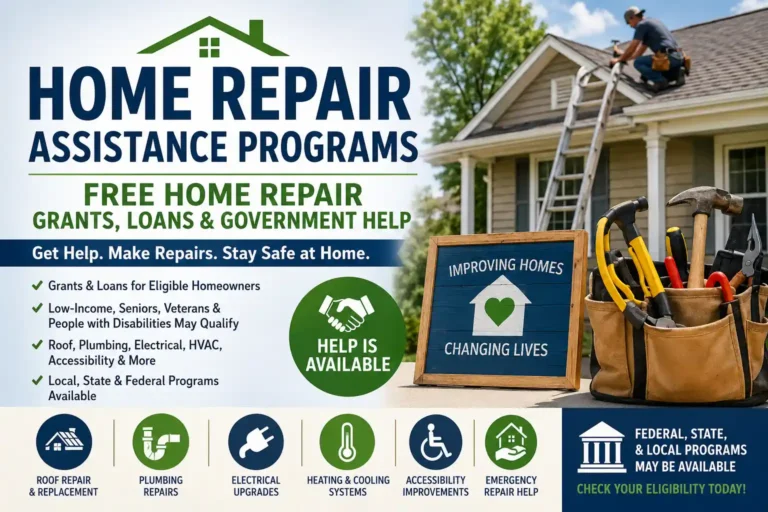
Owning a home comes with ongoing maintenance costs. A leaking roof, broken furnace, unsafe electrical wiring, or damaged plumbing can quickly become expensive. For many homeowners, especially those with limited incomes, paying for these repairs is difficult.
The good news is that several government home repair assistance programs, nonprofit organizations, and local agencies help eligible homeowners pay for essential repairs. Some programs offer grants that do not need to be repaid, while others provide low-interest loans or emergency repair assistance.
In this guide, you’ll learn about the most important home repair assistance programs available in the United States, who qualifies, what repairs are covered, and how to apply.
What Is Home Repair Assistance?
Home repair assistance refers to financial programs that help eligible homeowners repair, improve, or make their homes safer. Assistance may come from:
- Federal government programs
- State agencies
- Local governments
- Housing authorities
- Nonprofit organizations
- Community action agencies
- Utility companies
Depending on the program, assistance may be provided as:
- Grants
- Low-interest loans
- Deferred-payment loans
- Forgivable loans
- Emergency repair funding
- Free labor through nonprofit organizations
Many programs focus on helping homeowners remain in safe, healthy, and energy-efficient homes.
Can You Get Free Home Repair Assistance?
Yes, but eligibility depends on the program.
Some government programs provide free home repair grants that do not have to be repaid. These grants are usually available to homeowners who:
- Have low or very low incomes
- Are seniors
- Have disabilities
- Live in rural communities
- Are veterans
- Need emergency health or safety repairs
Other programs provide affordable loans with low interest rates and flexible repayment terms.
The availability of grants also depends on where you live because many states and counties operate their own home repair assistance programs.
Types of Government Home Repair Programs
Homeowners may qualify for different types of assistance depending on their income, location, and repair needs.
Common programs include:
- Federal repair grants
- Home improvement loans
- Emergency repair assistance
- Weatherization programs
- Accessibility modification grants
- Energy-efficiency improvements
- Rural housing repair programs
- Disaster recovery assistance
- Local housing rehabilitation programs
Understanding which category fits your situation makes it easier to find the right program.
USDA Section 504 Home Repair Program
One of the most well-known federal programs is the USDA Section 504 Home Repair Program, also called the Single Family Housing Repair Loans & Grants Program.
It helps eligible rural homeowners repair, improve, or modernize their homes.
Who Can Apply?
Generally, applicants must:
- Own and occupy the home.
- Be unable to obtain affordable credit elsewhere.
- Meet income limits.
- Live in an eligible rural area.
Additional requirements apply depending on whether you’re applying for a loan or a grant.
USDA Home Repair Grants
Grants are designed primarily for homeowners who are 62 years of age or older and cannot repay a repair loan.
Grant funds are intended to remove health and safety hazards from the home.
Examples include:
- Unsafe electrical systems
- Dangerous roofing problems
- Structural hazards
- Accessibility improvements
- Heating system repairs
Unlike loans, grants generally do not have to be repaid if program requirements are met.
USDA Home Repair Loans
Eligible homeowners who do not qualify for grants may be able to receive low-interest loans for repairs.
Loan funds may be used to:
- Repair roofs
- Upgrade plumbing
- Replace heating systems
- Improve insulation
- Repair electrical wiring
- Modernize older homes
Loan terms vary based on program requirements.
HUD Home Repair Programs
The U.S. Department of Housing and Urban Development (HUD) does not directly provide home repair grants to most homeowners. Instead, HUD supports many state and local housing agencies that administer rehabilitation programs.
Depending on where you live, HUD-funded programs may help with:
- Roof repairs
- Accessibility modifications
- Structural repairs
- Heating and cooling systems
- Plumbing improvements
- Electrical upgrades
- Lead hazard removal
Contact your local housing authority or city housing department to learn what programs are available in your community.
Weatherization Assistance Program (WAP)
The Weatherization Assistance Program (WAP) helps low-income households reduce energy costs while improving comfort and safety.
Instead of providing cash, the program pays for approved energy-saving improvements.
Services may include:
- Adding insulation
- Air sealing
- Heating system repairs
- Furnace replacement
- Water heater improvements
- Weather stripping
- Energy inspections
- Minor health and safety repairs
Reducing energy waste can lower monthly utility bills for years.
Emergency Home Repair Assistance
Some homeowners experience emergencies that cannot wait.
Examples include:
- Burst water pipes
- Roof collapse
- Furnace failure during winter
- Flood damage
- Unsafe electrical systems
- Sewer failures
- Broken water heaters
Many counties, nonprofit organizations, and housing agencies offer emergency repair funds for urgent situations.
Availability varies by location, and funding is often limited.
Home Repair Assistance for Seniors
Older homeowners often live on fixed incomes, making major repairs difficult to afford.
Several programs focus specifically on helping seniors remain safely in their homes.
Common assistance includes:
- Roof replacement
- Wheelchair ramps
- Bathroom accessibility improvements
- Walk-in showers
- Grab bars
- Heating repairs
- Plumbing repairs
- Electrical safety upgrades
Some local governments also offer property tax relief or rehabilitation grants for elderly homeowners.
Home Repair Assistance for Veterans
Veterans may qualify for specialized housing assistance programs through the U.S. Department of Veterans Affairs (VA).
Depending on eligibility, assistance may help pay for:
- Accessibility improvements
- Wheelchair ramps
- Bathroom remodeling
- Door widening
- Home modifications for service-connected disabilities
- Structural accessibility improvements
Veterans should contact the VA or a local veterans service organization to determine available benefits.
Home Repair Help for People With Disabilities
Homeowners with disabilities may qualify for programs that improve accessibility and safety.
Covered improvements may include:
- Ramps
- Stair lifts
- Roll-in showers
- Wider doorways
- Accessible kitchens
- Accessible bathrooms
- Lower countertops
- Safety railings
Some nonprofit organizations also provide volunteer labor for accessibility projects.
State and Local Home Repair Assistance
Many of the largest home repair programs operate at the state or local level.
Cities, counties, and state housing agencies frequently offer:
- Rehabilitation grants
- Low-interest loans
- Deferred payment loans
- Forgivable loans
- Emergency repair funds
- Accessibility improvements
Programs differ significantly by location, so homeowners should check with their local housing department or community development office.
Nonprofit Organizations That Help With Home Repairs
Government programs are not the only source of assistance.
Several nonprofit organizations help homeowners complete essential repairs.
These organizations may offer:
- Volunteer labor
- Building materials
- Accessibility improvements
- Roof repairs
- Critical home rehabilitation
- Minor emergency repairs
Well-known organizations include:
- Habitat for Humanity
- Rebuilding Together
- Community Action Agencies
- Volunteers of America
- Catholic Charities (selected locations)
Program availability depends on local funding and volunteer support.
What Repairs Are Usually Covered?
Most home repair assistance programs prioritize repairs that improve health, safety, or habitability.
Commonly covered repairs include:
- Roof replacement
- Roof leak repairs
- Plumbing repairs
- Electrical upgrades
- Heating system replacement
- Furnace repair
- HVAC improvements
- Water heater replacement
- Foundation stabilization
- Septic system repairs
- Well repairs
- Window replacement
- Door replacement
- Accessibility modifications
- Insulation
- Energy-efficiency improvements
- Mold remediation
- Lead paint hazard removal
Programs rarely pay for cosmetic improvements or luxury renovations.
In Part 1, we covered the major government home repair programs, including USDA Section 504, HUD-supported programs, the Weatherization Assistance Program, emergency repair assistance, and nonprofit organizations.
Now let’s look at who qualifies, what documents you’ll need, how to apply, and other important details.
Who Qualifies for Home Repair Assistance?
Every program has its own eligibility requirements, but many consider similar factors.
You may qualify if you:
- Own and live in the home as your primary residence.
- Meet the program’s income limits.
- Live in the area served by the program.
- Need repairs related to health or safety.
- Are unable to obtain affordable financing elsewhere (for some programs).
- Meet any age or disability requirements, if applicable.
Some programs are available only to homeowners, while others may also assist owners of manufactured homes or certain rural properties.
Income Requirements
Many government-funded home repair programs are intended for households with low or very low incomes.
Income limits are often based on:
- Household size
- County or metropolitan area
- State median income
- Area median income (AMI)
For example, a family of four may have a different income limit than a single homeowner, even within the same county.
Always check the income guidelines for the specific program you’re applying to.
Homeownership Requirements
Most repair assistance programs require applicants to:
- Own the property.
- Use it as their primary residence.
- Be responsible for maintaining the home.
Rental properties and vacation homes are generally not eligible for homeowner repair assistance programs.
What Documents Will You Need?
Although requirements vary, many programs ask applicants to provide documents such as:
Proof of Identity
Examples include:
- Driver’s license
- State-issued ID
- Passport
Proof of Homeownership
You may need:
- Property deed
- Mortgage statement
- Property tax records
Proof of Income
Programs often request:
- Recent pay stubs
- Social Security benefit statements
- Pension statements
- Retirement income documents
- Tax returns
- W-2 forms
Utility Bills
Applicants may be asked to provide:
- Electric bill
- Water bill
- Gas bill
These documents help verify occupancy.
Repair Estimates
Some programs require written estimates from licensed contractors before approving assistance.
The estimate may include:
- Materials
- Labor
- Total project cost
How to Apply for Home Repair Assistance
The application process depends on the organization, but it usually follows these steps.
Step 1: Find Programs in Your Area
Start by checking:
- Your state housing agency
- Local government housing department
- County community development office
- USDA Rural Development office
- HUD-approved housing agencies
- Community Action Agencies
Many cities also publish lists of available repair grants and loans on their official websites.
Step 2: Review Eligibility Requirements
Before applying, confirm that you meet the program’s requirements.
Pay attention to:
- Income limits
- Homeownership rules
- Property location
- Age requirements
- Disability requirements
- Rural or urban eligibility
Step 3: Gather Your Documents
Having your paperwork ready can speed up the application process.
Double-check that:
- Income documents are current.
- Identification has not expired.
- Homeownership records are accurate.
- Repair estimates are complete.
Step 4: Submit Your Application
Depending on the program, applications may be submitted:
- Online
- By mail
- In person
- Through a local housing office
Complete every section carefully to avoid delays.
Step 5: Home Inspection
Many programs schedule an inspection after receiving your application.
Inspectors may evaluate:
- Roof condition
- Plumbing
- Electrical systems
- Heating equipment
- Structural issues
- Accessibility needs
The inspection helps determine which repairs qualify.
Step 6: Approval
If your application is approved, you’ll receive information explaining:
- The amount of assistance
- Covered repairs
- Next steps
- Contractor requirements
- Project timeline
Some programs pay contractors directly instead of sending money to homeowners.
How Long Does Approval Take?
Approval times vary.
Some emergency repair programs may respond within days, while larger rehabilitation projects may take several weeks or months.
Factors that affect processing time include:
- Funding availability
- Inspection scheduling
- Document completeness
- Contractor estimates
- Local demand
Applying early can improve your chances before annual funding is exhausted.
Common Reasons Applications Are Denied
Even qualified homeowners may receive a denial if requirements are not met.
Common reasons include:
- Income exceeds program limits.
- The property is not eligible.
- The home is not the primary residence.
- Required documents are missing.
- Funding has been exhausted.
- Requested repairs are considered cosmetic.
- Applicant does not meet residency requirements.
If your application is denied, ask whether you can appeal or apply to another program.
What Repairs Are Usually Not Covered?
Government repair programs generally focus on essential repairs rather than home upgrades.
Projects that may not qualify include:
- Swimming pools
- Luxury kitchens
- Home theaters
- Decorative landscaping
- Hot tubs
- Outdoor entertainment areas
- Cosmetic remodeling
- New furniture
- Appliances not related to accessibility or safety
Each program has its own list of eligible improvements.
Tips to Improve Your Chances of Approval
While approval is never guaranteed, these tips may help:
- Apply as soon as funding becomes available.
- Complete every section of the application.
- Submit all required documents.
- Provide accurate income information.
- Obtain professional repair estimates.
- Respond quickly to requests for additional information.
- Keep copies of everything you submit.
Incomplete applications are one of the most common reasons for delays.
Can You Receive More Than One Type of Assistance?
In some cases, yes.
A homeowner may qualify for:
- A weatherization program to improve energy efficiency.
- A local rehabilitation grant for structural repairs.
- A nonprofit program that provides volunteer labor.
However, you generally cannot receive duplicate funding for the same repair from multiple programs.
Always inform each agency if you are receiving assistance from another source.
Are Home Repair Grants Taxable?
Many government home repair grants are not considered taxable income, but tax treatment depends on the specific program and your circumstances.
If you receive a grant and have questions about taxes, consult a qualified tax professional or review IRS guidance.
How to Avoid Home Repair Assistance Scams
Unfortunately, scammers sometimes target homeowners looking for financial help.
Protect yourself by following these tips:
- Apply through official government agencies or established nonprofit organizations.
- Never pay an upfront fee to “guarantee” a grant.
- Be cautious of unsolicited phone calls, emails, or social media messages.
- Verify websites before submitting personal information.
- Read all program requirements carefully.
Legitimate programs clearly explain eligibility requirements and application procedures.
Home Repair Assistance by State
Although several federal programs are available nationwide, many home repair grants and loans are administered at the state or local level.
Your state may offer programs through:
- State housing finance agencies
- Departments of housing and community development
- Community Action Agencies
- Local governments
- County housing departments
- Rural development offices
- Energy assistance agencies
These programs may help pay for:
- Roof replacement
- Plumbing repairs
- Electrical repairs
- Heating and cooling systems
- Accessibility improvements
- Foundation repairs
- Septic systems
- Weatherization upgrades
- Emergency home repairs
Visit your state government’s housing website or contact your local housing authority to learn which programs are currently accepting applications.
Can Renters Receive Home Repair Assistance?
Most government home repair programs are designed for homeowners.
However, renters may still benefit from:
- Weatherization programs (with landlord approval)
- Energy assistance programs
- Rental rehabilitation initiatives
- Accessibility modification programs in certain situations
If you rent your home, ask your local housing agency about programs available for tenants.
Can Mobile Home Owners Qualify?
Some assistance programs include manufactured or mobile homes, while others do not.
Eligibility often depends on:
- Whether you own both the home and the land
- The type of repair needed
- Local program rules
Always verify eligibility before applying.
What If You Live in a Rural Area?
Rural homeowners may qualify for additional assistance through the USDA Section 504 Home Repair Program and other rural housing initiatives.
These programs can provide grants or affordable loans for eligible homeowners who need to repair or modernize their homes.
What If You Need Immediate Repairs?
If your home has become unsafe because of a burst pipe, roof collapse, heating failure, or another emergency, contact your local housing office or emergency assistance agency as soon as possible.
Some communities reserve funding specifically for emergency repairs that threaten a home’s safety or habitability.
Additional Resources That May Help
Besides federal and state programs, you may find assistance from:
- Local churches
- Community foundations
- Area Agencies on Aging
- Disability resource centers
- Veterans service organizations
- Utility company assistance programs
- Local volunteer organizations
Even if one program cannot help, they may refer you to another organization in your area.
Tips Before Hiring a Contractor
If your repair program requires contractor estimates or approved vendors:
- Get multiple written estimates whenever possible.
- Verify that the contractor is licensed and insured.
- Ask for references.
- Never pay the entire amount upfront.
- Read every contract carefully before signing.
- Confirm whether the program pays the contractor directly.
These steps can help protect you from fraud and poor workmanship.
Frequently Asked Questions
1. Can I get a free government home repair grant?
Yes. Some federal, state, and local programs offer grants that do not need to be repaid if you meet their eligibility requirements.
2. Who qualifies for home repair assistance?
Eligibility depends on the program, but factors often include income, homeownership, age, disability status, location, and the type of repairs needed.
3. Are home repair grants available in every state?
Many states offer their own repair programs, although available funding, eligibility rules, and application periods vary.
4. Do I have to repay a home repair grant?
Generally, no. Grants usually do not require repayment if you comply with the program’s conditions. Some programs may require repayment if you sell the property within a specified period.
5. What is the USDA Section 504 Home Repair Program?
It is a federal program that provides eligible rural homeowners with loans and grants to repair, improve, or modernize their homes.
6. Can seniors receive free home repairs?
Yes. Many programs give priority to older homeowners, especially those with limited incomes who need health or safety repairs.
7. Can veterans receive home repair assistance?
Yes. Veterans may qualify for federal, state, local, or nonprofit programs, including VA housing modification benefits for eligible individuals.
8. Are cosmetic renovations covered?
Usually not. Most programs focus on repairs that improve safety, accessibility, energy efficiency, or the structural integrity of the home.
9. How long does the application process take?
Processing times vary. Emergency programs may respond quickly, while larger rehabilitation projects can take several weeks or months, depending on funding and inspections.
10. Where should I start looking for help?
Begin with your local housing authority, state housing agency, USDA Rural Development office, or official government resources to find programs available in your area.
Final Thoughts
Repairing a home can be expensive, but financial assistance is available for many homeowners who meet program requirements. Whether you need help replacing a roof, repairing plumbing, fixing electrical problems, improving accessibility, or making your home more energy efficient, government agencies and nonprofit organizations may be able to help.
Start by identifying programs available in your state or community, review the eligibility requirements carefully, and gather your documents before applying. Applying early and submitting a complete application can improve your chances of receiving assistance, especially since many programs have limited annual funding.
If one program cannot help, don’t stop there. Many homeowners qualify for assistance from multiple local, state, federal, and nonprofit organizations, making it worthwhile to explore every available option.