
Meta Title: Optometrist Near Me That Accepts Medicaid | Find Eye Care
Meta Description: Looking for an optometrist near you that accepts Medicaid? Learn how to find Medicaid-approved eye doctors, what services may be covered, and how to get affordable eye care.
Optometrist Near Me That Accepts Medicaid
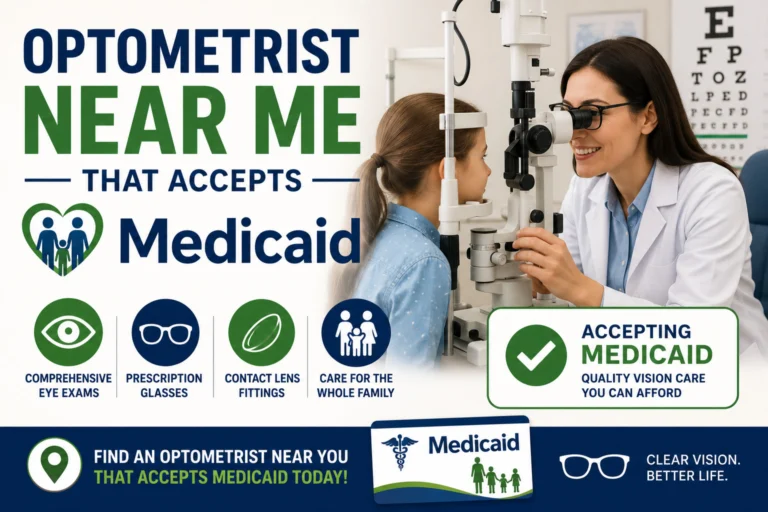
Finding an optometrist near me that accepts Medicaid can make routine eye care more affordable for individuals and families who depend on Medicaid for healthcare coverage. Medicaid vision benefits vary by state, but eligible members may receive coverage for eye exams, vision testing, prescription glasses, and other medically necessary services.
Because Medicaid provider networks and benefits differ by state and health plan, it’s important to confirm that an optometrist accepts your specific Medicaid coverage before making an appointment.
This guide explains how to find a Medicaid-accepting optometrist near you, what services may be covered, and what to ask before visiting.
What Does an Optometrist Do?
An optometrist is a licensed healthcare professional who examines the eyes and provides vision care. Optometrists can diagnose and manage many common eye conditions and prescribe corrective lenses.
Common services include:
- Comprehensive eye exams
- Vision testing
- Prescription eyeglasses
- Contact lens examinations
- Diagnosis of common eye conditions
- Glaucoma screening
- Diabetic eye examinations
- Treatment of certain eye conditions
- Referrals to ophthalmologists when specialized care is needed
The services available through Medicaid depend on your state’s program and your individual plan.
Does Medicaid Cover Optometry Services?
Medicaid may cover optometry and vision services, but coverage is different for children and adults and varies significantly by state.
For children, Medicaid’s Early and Periodic Screening, Diagnostic, and Treatment (EPSDT) benefit provides comprehensive screening and medically necessary treatment for eligible individuals under 21.
Adult vision benefits are determined by each state’s Medicaid program and may include routine eye examinations, corrective lenses, or medically necessary eye care.
Before scheduling an appointment, check your state’s Medicaid website or contact your health plan to confirm your benefits.
How to Find an Optometrist Near Me That Accepts Medicaid
If you’re searching for “optometrist near me that accepts Medicaid,” these steps can help you find a participating provider.
1. Check Your Medicaid Provider Directory
Start with the provider directory for your Medicaid plan. Search for:
- Optometrist
- Eye doctor
- Vision provider
- Optician
- Ophthalmologist
Enter your ZIP code or city to find providers in your area.
2. Call Your Medicaid Health Plan
Your insurance card usually includes a customer service number. Call and ask for optometrists who:
- Accept your specific Medicaid plan
- Are located near you
- Are accepting new patients
- Provide the vision services you need
This is one of the best ways to confirm network participation.
3. Contact the Optometrist’s Office
Provider directories may not always reflect recent changes. Call the office before your appointment and ask:
“Do you currently accept my Medicaid plan?”
Also confirm that the provider is accepting new patients.
4. Ask About Vision Benefits
Ask whether your Medicaid plan covers:
- Eye examinations
- Eyeglasses
- Frames
- Contact lenses
- Additional testing
- Follow-up visits
This can help you understand what you may have to pay.
What Vision Services May Medicaid Cover?
Depending on your state and plan, Medicaid may cover several types of eye care.
Routine Eye Exams
An eye exam can evaluate your vision and identify signs of eye disease or other health problems.
Prescription Eyeglasses
Some Medicaid programs cover glasses for eligible members. Coverage may include basic frames and prescription lenses.
Children’s Vision Care
Children generally receive broader vision benefits through Medicaid, including screening and medically necessary treatment under EPSDT.
Medically Necessary Eye Care
Medicaid may cover treatment and evaluation for certain eye conditions when medically necessary.
Contact Lenses
Contact lenses may be covered in certain situations, particularly when they are medically necessary, although routine cosmetic contact lenses may not be covered.
What May Not Be Covered?
Depending on your state and plan, Medicaid may not cover:
- Designer frames
- Premium lens upgrades
- Cosmetic contact lenses
- Optional coatings
- Certain elective procedures
- Services from providers outside your network
Always verify coverage before ordering glasses or purchasing additional services.
When Should You See an Optometrist?
You should schedule an eye examination if you experience:
- Blurry vision
- Difficulty seeing at night
- Frequent headaches
- Eye strain
- Difficulty reading
- Changes in vision
- Eye discomfort
- Increased sensitivity to light
- Problems focusing
People with diabetes or other conditions that can affect vision may need regular eye examinations according to their healthcare provider’s recommendations.
Eye Emergency Symptoms
Some eye problems require prompt medical attention rather than a routine optometry appointment.
Seek urgent medical evaluation for symptoms such as:
- Sudden loss of vision
- Severe eye pain
- Sudden flashes of light
- A sudden increase in floaters
- Serious eye injury
- Chemical exposure
- Significant swelling or redness
For a serious eye emergency, seek emergency medical care rather than waiting for a routine appointment.
What to Bring to Your Medicaid Eye Appointment
Bring:
- Medicaid insurance card
- Photo identification
- Current eyeglasses
- Contact lenses, if applicable
- Previous eye-care records
- List of medications
- Medical history
- Referral paperwork, if required
If you have an existing prescription, bring it with you if available.
Questions to Ask Before Your Appointment
Before visiting an optometrist, ask:
- Do you accept my Medicaid plan?
- Are you currently accepting new patients?
- Is the eye exam covered?
- Are prescription glasses covered?
- Do I need a referral?
- How often can I receive a covered eye exam?
- Are there any out-of-pocket costs?
- Do you offer pediatric eye care?
Getting answers before your appointment can help avoid unexpected expenses.
Medicaid Optometrist vs. Ophthalmologist
Although both professionals provide eye care, their roles are different.
| Optometrist | Ophthalmologist |
|---|---|
| Performs eye exams | Performs eye exams |
| Prescribes glasses and contacts | Prescribes glasses and contacts |
| Diagnoses many eye conditions | Diagnoses complex eye conditions |
| Provides many types of eye care | Performs eye surgery |
| Refers complex cases when needed | Provides medical and surgical treatment |
An optometrist is often the appropriate starting point for routine vision care. If a more serious condition is identified, you may be referred to an ophthalmologist.
How to Choose the Right Medicaid Optometrist
When comparing providers, consider:
- Medicaid participation
- Office location
- Appointment availability
- Experience with your age group
- Services offered
- Accessibility
- Office hours
- Patient reviews
- Availability of glasses or contact lenses
Convenience is especially important if you need regular eye examinations.
What If You Can’t Find a Medicaid Optometrist Nearby?
If you cannot find a participating provider in your immediate area, try:
- Contacting your Medicaid health plan
- Searching a larger ZIP-code radius
- Asking your primary care provider for a referral
- Checking community health centers
- Contacting local eye-care clinics
- Asking whether a nearby ophthalmology clinic accepts Medicaid
Your Medicaid plan may also be able to help you locate a participating provider.
Frequently Asked Questions
How do I find an optometrist near me that accepts Medicaid?
Use your Medicaid plan’s provider directory, contact Member Services, and call the optometrist’s office to confirm that they currently accept your specific Medicaid plan.
Does Medicaid pay for eye exams?
Some Medicaid programs cover eye examinations, but coverage varies by state and age. Children generally have broader vision benefits than adults.
Does Medicaid cover glasses?
Many Medicaid programs provide eyeglass benefits for eligible children, while adult coverage varies by state and plan.
Can I get contacts through Medicaid?
Contact lens coverage varies. Medically necessary contacts may be covered in some circumstances, while cosmetic contact lenses are generally less likely to qualify.
Can I see an optometrist without a referral?
This depends on your Medicaid plan. Some plans allow direct appointments, while others may require a referral for certain services.
Does every optometrist accept Medicaid?
No. Medicaid participation varies by provider, location, state, and specific Medicaid plan.
Final Thoughts
Finding an optometrist near me that accepts Medicaid starts with checking your plan’s provider directory and confirming participation directly with the eye-care office. Medicaid vision coverage varies by state, so it’s important to verify whether your eye exam, glasses, contact lenses, or other services are covered.
Before scheduling an appointment, ask whether the optometrist accepts your specific Medicaid plan, whether new patients are being accepted, and whether the services you need are covered. Taking these steps can help you find affordable, convenient eye care while avoiding unexpected costs.