
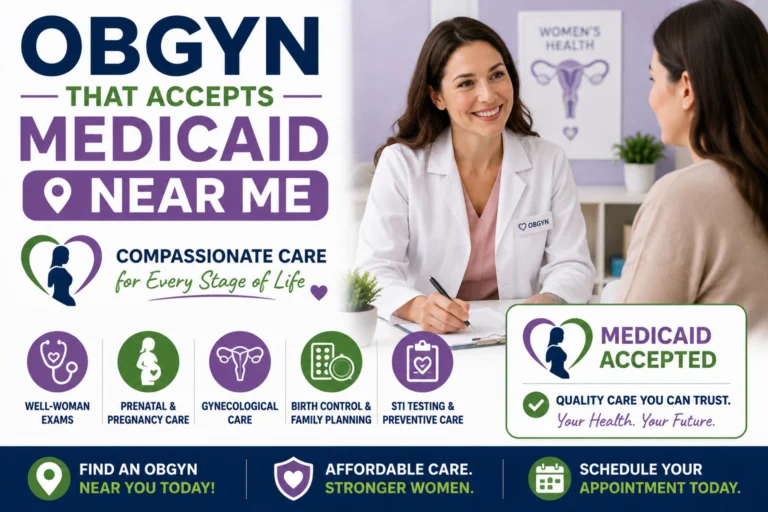
Meta Title: OBGYN That Accepts Medicaid Near Me | Find a Medicaid OBGYN
Meta Description: Looking for an OBGYN that accepts Medicaid near you? Learn how to find Medicaid-approved OBGYNs, what services may be covered, and how to choose the right women’s healthcare provider.
OBGYN That Accepts Medicaid Near Me
Finding an OBGYN that accepts Medicaid near me can help women access affordable and essential healthcare services. Medicaid provides coverage for many pregnancy, reproductive health, preventive care, and medically necessary services for eligible members.
However, Medicaid programs and provider networks vary by state and health plan. Not every OBGYN accepts every Medicaid plan, so it is important to verify coverage and network participation before scheduling an appointment.
This guide explains how to find an OBGYN near you that accepts Medicaid, what services may be covered, and what to ask before your first visit.
What Is an OBGYN?
An OBGYN is a healthcare professional specializing in obstetrics and gynecology.
Obstetrics focuses primarily on pregnancy, childbirth, and postpartum care, while gynecology focuses on women’s reproductive and overall reproductive health.
An OBGYN may provide:
- Annual women’s health exams
- Pregnancy care
- Prenatal appointments
- Postpartum care
- Birth control counseling
- Pap tests
- Pelvic examinations
- Menstrual health care
- Treatment for vaginal infections
- STI testing and treatment
- Menopause care
- Fertility evaluations
- Treatment for reproductive health conditions
The exact services covered by Medicaid depend on your state and health plan.
Does Medicaid Cover OBGYN Services?
Yes. Medicaid provides coverage for many women’s healthcare services for eligible members. Pregnancy-related services are an important part of Medicaid coverage, although specific benefits and provider requirements vary by state.
Depending on your plan, covered services may include:
- Routine gynecological examinations
- Prenatal care
- Labor and delivery
- Postpartum visits
- Family planning services
- Birth control
- Pap tests and other screenings
- Breast health services
- STI testing and treatment
- Medically necessary diagnostic testing
- Treatment of gynecological conditions
Some services may require a referral or prior authorization.
How to Find an OBGYN That Accepts Medicaid Near Me
If you are searching online for an OBGYN that accepts Medicaid near me, these steps can help you find a participating provider.
1. Check Your Medicaid Provider Directory
Start with your state’s Medicaid website or your Medicaid managed care plan’s provider directory.
Search for:
- OBGYN
- Obstetrician
- Gynecologist
- Women’s health
- Women’s healthcare provider
Enter your ZIP code or city to find providers in your area.
2. Contact Your Medicaid Health Plan
The phone number on your Medicaid insurance card can connect you with Member Services.
Ask for OBGYNs who:
- Accept your specific Medicaid plan
- Are located near you
- Are accepting new patients
- Provide pregnancy care, if needed
- Offer the women’s health services you need
Your health plan can also explain whether you need a referral to see an OBGYN.
3. Call the OBGYN Office
Provider directories may not always reflect recent changes. Always call the office before making an appointment.
Ask:
“Do you currently accept my Medicaid plan?”
You should also confirm that the provider is accepting new patients.
4. Ask Your Primary Care Provider
Your primary care doctor may be able to recommend an OBGYN in your area and provide a referral if your Medicaid plan requires one.
5. Check Community Health Centers
Community health centers and women’s health clinics may offer reproductive and women’s healthcare services and may accept Medicaid.
What Services Can a Medicaid OBGYN Provide?
The services available depend on your healthcare needs and Medicaid coverage.
Routine Gynecological Care
Routine visits may include:
- Pelvic examinations
- Pap testing
- Breast health discussions
- Menstrual health evaluation
- Reproductive health counseling
- Preventive screenings
Regular visits can help identify potential health concerns early.
Pregnancy and Prenatal Care
If you are pregnant, an OBGYN may provide:
- Pregnancy confirmation
- Prenatal examinations
- Ultrasound referrals or services
- Blood testing
- Pregnancy screenings
- Monitoring of maternal health
- Monitoring of fetal development
- Labor and delivery planning
- Postpartum care
Medicaid pregnancy benefits vary by state, so confirm your coverage with your health plan.
Birth Control and Family Planning
Depending on your plan and state, Medicaid may cover family planning services such as:
- Birth control counseling
- Prescription contraceptives
- Certain long-acting contraceptive methods
- Family planning examinations
- Reproductive health counseling
Ask your provider which options are covered by your plan.
Menopause Care
OBGYNs can help women manage symptoms and health concerns associated with menopause, including:
- Menstrual changes
- Hot flashes
- Vaginal symptoms
- Sleep difficulties
- Bone health concerns
- Hormonal changes
Coverage for specific treatments depends on your Medicaid plan.
How Much Does an OBGYN Visit Cost With Medicaid?
If the OBGYN participates in your Medicaid plan and the service is covered, your out-of-pocket cost may be low or $0 depending on your eligibility and plan.
However, costs can vary based on:
- State Medicaid rules
- Your Medicaid plan
- The type of service
- Whether the provider is in-network
- Prior authorization requirements
- Applicable cost-sharing rules
Before receiving non-emergency services, verify your benefits with your health plan and provider.
What to Ask Before Choosing an OBGYN
Finding a provider who accepts Medicaid is important, but you should also consider whether the office meets your healthcare needs.
Ask:
- Do you accept my specific Medicaid plan?
- Are you accepting new patients?
- Do you provide pregnancy care?
- Do you deliver babies at a local hospital?
- Do you provide annual gynecological exams?
- Do you offer telehealth appointments?
- Do I need a referral?
- How soon can I get an appointment?
- What hospital is affiliated with the practice?
- Are there any expected out-of-pocket costs?
These questions can help you find an OBGYN who is convenient and appropriate for your needs.
What to Bring to Your OBGYN Appointment
Bring:
- Medicaid insurance card
- Photo identification
- List of medications
- List of allergies
- Relevant medical records
- Previous test results, if available
- Pregnancy records, if applicable
- Referral paperwork, if required
You may also want to write down questions or symptoms you want to discuss.
When Should You See an OBGYN?
You do not necessarily need to wait until you have a health problem to schedule an OBGYN appointment.
Women may see an OBGYN for:
- Annual preventive care
- Pregnancy planning
- Pregnancy
- Menstrual problems
- Pelvic pain
- Abnormal bleeding
- Vaginal symptoms
- Birth control
- Fertility concerns
- Menopause symptoms
- Reproductive health concerns
If you experience severe symptoms, seek appropriate urgent or emergency medical care.
Finding an OBGYN During Pregnancy
If you are pregnant and have Medicaid, finding prenatal care early is important.
When choosing an OBGYN, consider:
- Whether the provider accepts your Medicaid plan
- Hospital affiliation
- Prenatal appointment availability
- Delivery services
- High-risk pregnancy referrals
- Ultrasound availability
- Labor and delivery policies
- Postpartum care
If you have a high-risk pregnancy, ask whether the practice works with maternal-fetal medicine specialists.
What If You Can’t Find a Medicaid OBGYN Nearby?
Sometimes nearby OBGYN offices may not accept Medicaid or may not be accepting new patients.
If this happens, try:
Contacting Your Medicaid Plan
Ask Member Services for additional participating OBGYNs in your area.
Expanding Your Search
Search nearby ZIP codes or communities if transportation is available.
Checking Women’s Health Clinics
Some community clinics provide women’s healthcare and accept Medicaid.
Asking Your Primary Care Doctor
Your primary care provider may be able to help you locate an OBGYN.
Asking About a Waiting List
If your preferred provider is not accepting new patients, ask whether you can join a cancellation or waiting list.
Medicaid OBGYN vs. Midwife
An OBGYN and a certified nurse-midwife can both provide certain pregnancy and women’s healthcare services, but their roles are different.
An OBGYN is a physician trained in obstetrics and gynecology and can provide medical and surgical care.
A certified nurse-midwife specializes in pregnancy, childbirth, postpartum care, and reproductive healthcare within their scope of practice.
The best choice depends on your health needs, pregnancy risk level, preferences, and Medicaid coverage.
Frequently Asked Questions
How do I find an OBGYN that accepts Medicaid near me?
Use your Medicaid plan’s provider directory, contact Member Services, and call OBGYN offices directly to confirm that they accept your specific Medicaid plan and are accepting new patients.
Does Medicaid cover gynecologist visits?
Medicaid covers many women’s healthcare services for eligible members, but exact benefits vary by state and plan.
Does Medicaid cover pregnancy and prenatal care?
Medicaid provides pregnancy-related coverage for eligible individuals, although eligibility rules, covered services, and enrollment requirements vary by state.
Do I need a referral to see an OBGYN?
Some Medicaid plans allow members to see an OBGYN directly, while others may have referral requirements for certain services. Check your specific plan.
Can I choose my own OBGYN?
You can generally choose from providers participating in your Medicaid plan’s network, subject to your plan’s rules.
What if no OBGYN near me accepts Medicaid?
Contact your Medicaid health plan and ask for additional participating providers. You can also search nearby communities, community health centers, and women’s health clinics.
Final Thoughts
Finding an OBGYN that accepts Medicaid near me can make essential women’s healthcare more accessible and affordable. Start by checking your Medicaid provider directory and contacting your health plan for a current list of participating OBGYNs.
Before scheduling an appointment, confirm that the provider accepts your specific Medicaid plan, is accepting new patients, and offers the services you need. Whether you need routine gynecological care, pregnancy services, family planning, or treatment for a women’s health concern, taking the time to verify your coverage can help you find the right provider while avoiding unexpected costs.