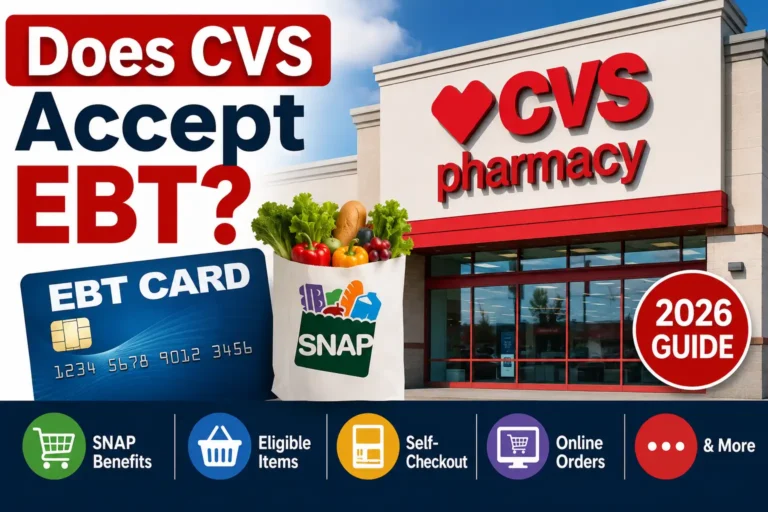
Yes. Most CVS Pharmacy locations accept SNAP EBT cards for eligible food purchases. If your local CVS is authorized by the USDA to process SNAP benefits, you can use your EBT card at the register or self-checkout to pay for approved grocery items.
However, EBT cannot be used for everything sold at CVS. Many shoppers assume they can buy medicine, vitamins, toiletries, or household supplies with SNAP benefits, but those products are not eligible.
Understanding what qualifies before you shop can help you avoid declined transactions and save time at checkout.
This guide explains how CVS accepts EBT, what you can buy, what is excluded, whether online orders are supported, and answers the most common questions shoppers ask.
Quick Answer
Does CVS accept EBT?
Yes. Most CVS Pharmacy stores accept SNAP EBT cards for eligible food purchases.
You can generally buy:
- Bread
- Milk
- Eggs
- Cheese
- Fresh fruit
- Fresh vegetables
- Frozen foods
- Breakfast cereal
- Rice
- Pasta
- Canned vegetables
- Canned beans
- Peanut butter
- Juice
- Bottled water
- Snack foods
- Frozen meals that are not sold hot
You cannot use SNAP EBT for:
- Prescription medicine
- Over-the-counter medicine
- Vitamins
- Supplements
- Cosmetics
- Soap
- Cleaning supplies
- Pet food
- Alcohol
- Tobacco
- Hot prepared foods
Does CVS Accept EBT in 2026?
Yes. CVS continues to accept SNAP EBT at many participating locations throughout the United States.
Although CVS is best known as a pharmacy, thousands of stores also carry groceries and everyday food items that qualify under SNAP rules.
If a store is approved by the USDA SNAP program, eligible food purchases can be paid for using an EBT card.
Because individual stores may vary, it is always a good idea to confirm participation before visiting if you are unsure.
How Does EBT Work at CVS?
Using your EBT card at CVS is simple.
After selecting eligible food items, proceed to checkout.
Swipe or insert your EBT card just like a debit card.
Enter your PIN.
The system automatically identifies which products qualify under SNAP.
Eligible items are charged to your SNAP balance.
Items that are not SNAP eligible must be paid using another payment method.
You can complete the transaction using:
- Cash
- Debit card
- Credit card
- CVS gift card (for remaining balance where applicable)
What Can You Buy With EBT at CVS?
Although CVS is not a traditional grocery store, many food products qualify for SNAP.
Common eligible purchases include:
Dairy Products
You can usually purchase:
- Milk
- Cheese
- Yogurt
- Butter
- Cottage cheese
Bread and Bakery Items
SNAP covers many bakery products such as:
- Sandwich bread
- Rolls
- Tortillas
- Bagels
- English muffins
Fresh bakery products are generally eligible as long as they are not sold hot.
Fresh Fruits and Vegetables
Many CVS stores sell:
- Apples
- Bananas
- Oranges
- Grapes
- Lettuce
- Tomatoes
- Carrots
- Salad mixes
These items qualify for SNAP.
Frozen Foods
Eligible frozen foods include:
- Frozen vegetables
- Frozen fruit
- Frozen dinners intended for home preparation
- Frozen pizza
- Frozen breakfast items
Products sold hot and ready to eat do not qualify.
Pantry Staples
You can purchase:
- Rice
- Pasta
- Beans
- Flour
- Sugar
- Cooking oil
- Peanut butter
- Jelly
- Canned soup
- Canned vegetables
- Canned fruit
Breakfast Foods
Most breakfast foods qualify, including:
- Cereal
- Oatmeal
- Pancake mix
- Syrup
- Granola
Meat and Protein
Some CVS stores carry:
- Canned tuna
- Canned chicken
- Beef jerky (when sold as food)
- Nuts
- Trail mix
Availability varies by location.
Beverages
SNAP usually covers:
- Bottled water
- Juice
- Coffee
- Tea
- Sports drinks
- Soft drinks
Snack Foods
Eligible snacks include:
- Potato chips
- Crackers
- Cookies
- Pretzels
- Popcorn
- Granola bars
Seeds and Food-Producing Plants
You may also purchase:
- Vegetable seeds
- Herb seeds
- Fruit plants
These qualify because they produce food for the household.
What Cannot Be Purchased With EBT at CVS?
Many CVS products are not covered by SNAP.
These include:
Medicines
SNAP cannot be used for:
- Prescription drugs
- Pain relievers
- Cold medicine
- Allergy medicine
- First aid supplies
Vitamins and Supplements
Products labeled as supplements are not SNAP eligible.
Examples include:
- Multivitamins
- Protein supplements labeled as dietary supplements
- Fish oil
- Herbal supplements
Personal Care Products
Items such as:
- Shampoo
- Soap
- Toothpaste
- Deodorant
- Razors
- Cosmetics
must be paid for separately.
Household Supplies
SNAP does not cover:
- Laundry detergent
- Dish soap
- Paper towels
- Toilet paper
- Trash bags
- Cleaning products
Baby Care Products
The following are not SNAP eligible:
- Diapers
- Baby wipes
- Formula bottles
- Pacifiers
Baby formula itself is generally eligible because it is food.
Pet Supplies
You cannot buy:
- Dog food
- Cat food
- Pet treats
- Bird seed intended for pets
using SNAP benefits.
Alcohol and Tobacco
Federal SNAP rules prohibit purchases of:
- Beer
- Wine
- Liquor
- Cigarettes
- Cigars
- Tobacco products
- Nicotine products
Hot Prepared Foods
Ready-to-eat hot meals are generally excluded unless purchased through a state’s Restaurant Meals Program, which does not typically apply at CVS.
Eligible vs. Non-Eligible Items at CVS
| Eligible with SNAP EBT | Not Eligible |
|---|---|
| Milk | Vitamins |
| Cheese | Medicine |
| Eggs | Shampoo |
| Bread | Soap |
| Rice | Laundry detergent |
| Pasta | Cosmetics |
| Peanut butter | Diapers |
| Fresh fruit | Cigarettes |
| Fresh vegetables | Alcohol |
| Frozen food | Hot prepared meals |
| Juice | Cleaning supplies |
| Bottled water | Pet food |
Does CVS Pharmacy Accept EBT?
Yes, many CVS Pharmacy locations accept SNAP EBT cards, but only for eligible food items sold in the store.
Many people believe they can use EBT for prescriptions because CVS is a pharmacy. That is not how SNAP works.
SNAP benefits are intended to help households buy food. Prescription medications, over-the-counter medicine, and pharmacy services cannot be paid for with SNAP EBT.
If your CVS carries groceries, snacks, beverages, or other USDA-approved food products, those items can usually be purchased with your EBT card.
Can You Use EBT at CVS Self-Checkout?
Yes. Most CVS stores with self-checkout machines allow customers to pay using an EBT card.
The process is similar to using a debit card.
- Scan your eligible items.
- Select EBT as your payment method.
- Insert or swipe your EBT card.
- Enter your PIN.
- The register automatically separates eligible and non-eligible purchases.
- Pay the remaining balance with another payment method if necessary.
Self-checkout is often one of the quickest ways to shop because the register automatically identifies which products qualify under SNAP rules.
Does CVS Accept EBT Online?
Generally, no.
Unlike some major grocery retailers, CVS has limited support for SNAP EBT when shopping online.
Depending on your location and available services, you may be able to order groceries online, but SNAP EBT is not widely accepted for purchases made through CVS.com or the CVS mobile app.
If online EBT shopping is important to you, check your state’s approved online SNAP retailers before placing an order.
Can You Use EBT on the CVS App?
In most cases, no.
Although the CVS app allows customers to browse products, refill prescriptions, and place pickup or delivery orders, SNAP EBT is generally not available as an online payment option.
Policies may change over time, so it is always a good idea to check the latest payment options before ordering.
Does CVS Delivery Accept EBT?
Usually not.
Many CVS delivery orders are fulfilled through third-party delivery services, and SNAP EBT payment is generally unavailable for these orders.
If you need to use your EBT benefits, shopping inside a participating CVS store remains the most reliable option.
Can You Buy Medicine With EBT at CVS?
No.
This is one of the most common questions shoppers ask.
You cannot use SNAP EBT to buy:
- Prescription medicine
- Pain relievers
- Cold medicine
- Allergy medicine
- First aid supplies
- Medical equipment
These products are not considered food under federal SNAP regulations.
Can You Buy Vitamins at CVS With EBT?
No.
Most vitamins and dietary supplements are not SNAP eligible.
This includes:
- Multivitamins
- Protein supplements labeled as dietary supplements
- Fish oil
- Herbal capsules
- Immune support supplements
A simple way to tell is by checking the product label. If it displays a Supplement Facts panel instead of a Nutrition Facts label, it generally cannot be purchased with SNAP benefits.
Can You Buy Protein Powder With EBT at CVS?
It depends.
Some protein powders qualify, while others do not.
Eligible
Protein powders that have a Nutrition Facts label are generally SNAP eligible.
Not Eligible
Protein powders labeled with Supplement Facts are considered dietary supplements and cannot be purchased with SNAP.
Always check the package before buying.
Can You Buy Baby Formula With EBT at CVS?
Yes.
Baby formula is considered an eligible food product under SNAP.
Many CVS stores also carry:
- Infant cereal
- Baby food jars
- Baby snacks
These items generally qualify for EBT purchases.
Can You Buy Energy Drinks With EBT?
It depends on the label.
Eligible
Energy drinks with a Nutrition Facts label usually qualify.
Not Eligible
Energy drinks marketed as dietary supplements with a Supplement Facts label cannot be purchased using SNAP.
Does CVS Accept EBT Cash?
If your state provides EBT Cash benefits (sometimes called TANF cash assistance), you may be able to purchase additional items that SNAP does not cover.
EBT Cash rules differ from SNAP.
Depending on your state’s program, EBT Cash may be used for a wider variety of purchases.
Ask your local CVS cashier if you plan to use your cash benefits.
SNAP EBT vs. OTC Benefits at CVS
Many shoppers confuse SNAP benefits with Medicare Advantage or Medicaid OTC benefits.
They are completely different programs.
| SNAP EBT | OTC Benefits |
|---|---|
| Pays for eligible food | Pays for approved health products |
| Issued through SNAP | Offered by certain health insurance plans |
| Cannot buy medicine | Often covers eligible OTC medicine |
| USDA rules apply | Insurance company rules apply |
If you have an OTC card from Humana, Aetna, UnitedHealthcare, or another insurance provider, you may be able to purchase certain health products that SNAP does not cover.
Does CVS Accept WIC?
Some CVS stores participate in the WIC program, but participation varies by state and by individual location.
Unlike SNAP, WIC has a much more limited list of approved foods.
If you receive WIC benefits, check your state’s approved retailer list before shopping.
Can You Split Your Payment at CVS?
Yes.
Many customers buy both eligible and non-eligible items during the same visit.
The register automatically applies your SNAP balance to qualifying food items first.
You can then pay the remaining amount using:
- Debit card
- Credit card
- Cash
- CVS gift card (where accepted)
This makes it easy to complete your purchase without separating items before checkout.
Tips for Shopping With EBT at CVS
To make your shopping trip easier:
- Check your EBT balance before visiting.
- Read product labels if buying protein powders or energy drinks.
- Separate food and non-food items if you want a faster checkout.
- Keep another payment method available for non-eligible products.
- Ask a cashier if you are unsure whether an item qualifies.
- Save your receipt to review your remaining SNAP balance.
Does CVS Accept EBT in Every State?
Most CVS stores that are authorized USDA SNAP retailers accept EBT for eligible food purchases. Since SNAP is a federal program, approved CVS locations across the United States generally follow the same eligibility rules.
You can typically use your EBT card at participating CVS stores in states such as:
- California
- Texas
- Florida
- New York
- Illinois
- Pennsylvania
- Ohio
- Michigan
- Georgia
- Arizona
- North Carolina
- Virginia
- Washington
- Oregon
- Colorado
- Massachusetts
Store participation may vary, especially at smaller locations that do not sell groceries. If you are unsure, look for the SNAP EBT acceptance sign near the entrance or ask a store employee.
Common Reasons Your EBT Card May Be Declined at CVS
A declined transaction does not always mean there is a problem with your card.
Here are the most common reasons:
Your SNAP Balance Is Too Low
If you do not have enough benefits remaining, the transaction will not be approved.
You Selected Non-Eligible Items
Products like vitamins, medicine, cosmetics, and cleaning supplies cannot be purchased with SNAP.
You Entered the Wrong PIN
Entering the wrong PIN multiple times may temporarily lock your transaction.
The Store Does Not Participate in SNAP
Although uncommon, some CVS locations may not be authorized SNAP retailers.
Temporary System Issue
Occasionally, EBT processing systems experience outages. Waiting a few minutes or trying another register often resolves the issue.
How to Check Your EBT Balance Before Shopping
Checking your balance before visiting CVS can help prevent declined purchases.
You can usually check your balance by:
- Calling the phone number on the back of your EBT card
- Using your state’s EBT website
- Logging into your state’s EBT mobile app
- Reviewing your previous store receipt
Tips to Make Shopping Easier at CVS
Follow these simple tips for a smoother checkout experience:
- Shop for SNAP-eligible food first.
- Read product labels carefully.
- Keep a second payment method available.
- Verify your SNAP balance before shopping.
- Use self-checkout if available.
- Save your receipt after every purchase.
Frequently Asked Questions
Does CVS accept EBT?
Yes. Most participating CVS Pharmacy locations accept SNAP EBT for eligible food purchases.
Can I use EBT at CVS self-checkout?
Yes. Most self-checkout machines allow EBT payments for eligible items.
Can I buy medicine with EBT at CVS?
No. Prescription and over-the-counter medicines are not SNAP eligible.
Does CVS accept EBT online?
Generally, no. Most online CVS orders cannot be paid for using SNAP EBT.
Can I use EBT on the CVS app?
In most cases, no. The CVS app does not widely support SNAP EBT payments.
Can I buy vitamins with EBT?
No. Vitamins and dietary supplements are not covered by SNAP.
Can I buy baby formula with EBT?
Yes. Baby formula is an eligible SNAP purchase.
Does CVS accept EBT Cash?
Many CVS stores accept EBT Cash where available, but the items you can purchase depend on your state’s cash assistance program.
Can I buy snacks with EBT at CVS?
Yes. Most packaged snack foods qualify under SNAP rules.
Can I buy bottled water with EBT?
Yes. Bottled water is SNAP eligible.
Can I buy soda with EBT at CVS?
Yes. Soda is generally eligible under current federal SNAP rules.
Can I buy candy with EBT?
Yes. Candy is generally SNAP eligible if it is intended for human consumption.
Can I use EBT and a debit card together?
Yes. Eligible items are charged to your EBT card, and you can use another payment method for the remaining balance.
Does every CVS accept EBT?
Most participating locations do, but availability depends on whether the store is approved as a USDA SNAP retailer.
Can I buy hot food at CVS with EBT?
No. Hot prepared foods are generally not eligible under SNAP rules.
Final Thoughts
CVS is a convenient place to shop for groceries, snacks, beverages, and other eligible food items if you receive SNAP benefits. Most participating CVS Pharmacy locations accept EBT, making it easy to pick up essential food items while shopping for everyday needs.
Before you check out, remember that SNAP only covers approved food products. Medicines, vitamins, personal care products, household supplies, alcohol, tobacco, and hot prepared foods must be purchased using another payment method.
If you plan to shop online, check CVS’s current payment options and your state’s approved online SNAP retailers, as EBT support for online orders remains limited.
By understanding what qualifies and checking your balance before shopping, you can make the most of your SNAP benefits and enjoy a faster, smoother checkout experience at CVS.