
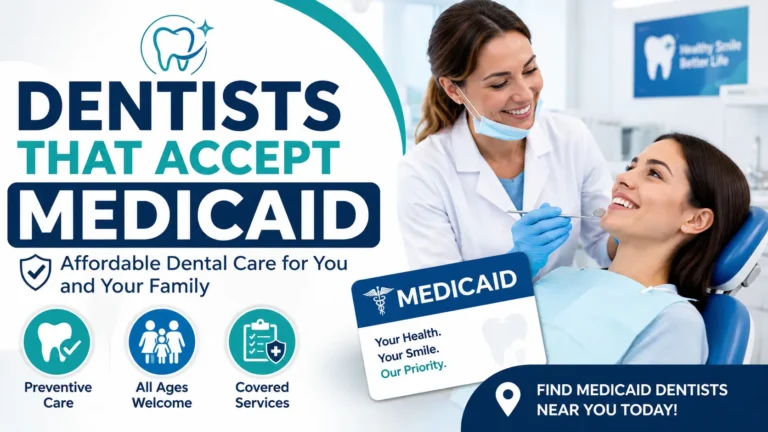
Finding dentists that accept Medicaid can make it easier to receive affordable dental care without paying high out-of-pocket costs. Medicaid provides dental benefits for eligible individuals, but the coverage available and participating dentists vary by state.
Whether you need a routine dental cleaning, tooth extraction, filling, denture, or emergency dental care, this guide explains how to find a Medicaid dentist, what services may be covered, and what to expect before your appointment.
Quick Answer
Yes, many dentists accept Medicaid.
Depending on your state, Medicaid may cover services such as:
- Dental exams
- Teeth cleanings
- X-rays
- Fillings
- Tooth extractions
- Root canals (in some states)
- Crowns (when covered)
- Dentures
- Emergency dental care
- Pediatric dental services
Coverage for adults varies by state, while children enrolled in Medicaid generally receive comprehensive dental benefits through the Early and Periodic Screening, Diagnostic, and Treatment (EPSDT) benefit.
What Is Medicaid Dental Coverage?
Medicaid is a joint federal and state health insurance program for eligible low-income individuals and families.
Dental coverage depends on:
- Your state
- Your age
- Your eligibility category
- The specific dental service you need
Children typically receive broader dental coverage than adults.
Does Medicaid Cover Dental Care?
Yes, but benefits differ by state.
For Children
Children enrolled in Medicaid generally receive comprehensive dental services, including:
- Routine checkups
- Preventive cleanings
- Fluoride treatments
- Sealants
- Fillings
- Crowns when medically necessary
- Orthodontic services in qualifying cases
- Emergency dental treatment
For Adults
Adult dental benefits vary widely by state. Depending on where you live, Medicaid may cover:
- Dental exams
- Cleanings
- X-rays
- Fillings
- Tooth extractions
- Dentures
- Limited root canals
- Emergency dental care
Some states provide comprehensive adult dental coverage, while others offer only emergency services.
How to Find Dentists That Accept Medicaid
Finding a participating dentist is easier than ever.
You can:
- Use your state’s Medicaid provider directory.
- Contact your Medicaid managed care plan.
- Ask your primary care provider for a referral.
- Call local dental offices and ask whether they accept your specific Medicaid plan.
- Search online for “dentists that accept Medicaid near me.”
Because participation changes over time, it’s a good idea to confirm acceptance before scheduling an appointment.
What Dental Services May Be Covered?
Depending on your state’s Medicaid program, covered services may include:
Preventive Care
- Dental exams
- Routine cleanings
- Fluoride treatments
- Dental sealants
- Oral cancer screenings
Restorative Care
- Tooth-colored fillings
- Silver fillings
- Crowns (when covered)
- Root canals (selected cases)
- Dental bonding
Tooth Extractions
Medicaid often covers extractions when they are medically necessary.
This may include:
- Simple extractions
- Surgical extractions
- Removal of severely damaged teeth
Dentures
Many state Medicaid programs cover:
- Full dentures
- Partial dentures
- Denture adjustments
- Denture repairs
Coverage rules vary by state.
Emergency Dental Care
Emergency dental treatment may include:
- Severe tooth pain
- Dental infections
- Abscess treatment
- Broken teeth
- Emergency extractions
- Swelling requiring immediate care
Does Medicaid Cover Braces?
Sometimes.
For children, Medicaid may cover orthodontic treatment if it is considered medically necessary.
For adults, orthodontic coverage is much less common and depends on state rules.
What to Bring to Your Appointment
Before visiting a Medicaid dentist, bring:
- Your Medicaid card
- A government-issued photo ID (if required)
- Any referral forms, if your plan requires them
- A list of current medications
- Previous dental records, if available
Having the necessary documents can help avoid delays.
Questions to Ask Before Scheduling
Before making an appointment, consider asking:
- Do you accept my specific Medicaid plan?
- Are you accepting new Medicaid patients?
- Is the treatment I need covered?
- Will I need prior authorization?
- Are there any out-of-pocket costs?
Tips for Finding the Right Medicaid Dentist
To make your search easier:
- Choose a dentist close to home.
- Read recent patient reviews.
- Confirm office hours and appointment availability.
- Ask about emergency appointments.
- Verify that the office accepts your Medicaid plan before your visit.
Frequently Asked Questions
How do I find dentists that accept Medicaid near me?
You can search your state’s Medicaid provider directory, contact your Medicaid plan, or call local dental offices to confirm they accept your specific Medicaid coverage.
Does Medicaid cover dental cleanings?
In many states, yes. Coverage varies, especially for adults, so check your state’s Medicaid dental benefits.
Can adults get dental care through Medicaid?
Yes, but covered services depend on your state’s Medicaid program. Some states offer comprehensive adult dental benefits, while others provide only limited or emergency coverage.
Does Medicaid cover emergency dental care?
Many Medicaid programs cover emergency dental treatment when it is medically necessary.
Can I get dentures through Medicaid?
Some state Medicaid programs cover dentures for eligible patients. Coverage rules differ by state.
Benefits of Choosing a Medicaid Dentist
Seeing a participating Medicaid dentist can help you:
- Receive preventive care before problems worsen.
- Reduce out-of-pocket dental costs.
- Access emergency treatment when needed.
- Improve your oral health.
- Maintain regular dental checkups for you and your family.
Final Thoughts
Finding dentists that accept Medicaid can help you receive affordable dental care while making the most of your health benefits. Although covered services vary by state—especially for adults—many Medicaid-participating dentists provide preventive care, restorative treatment, emergency services, and pediatric dental care.
Before scheduling an appointment, verify that the dental office accepts your specific Medicaid plan and confirm whether the treatment you need is covered. Taking these steps can help you avoid unexpected costs and ensure you receive the care you’re entitled to.