
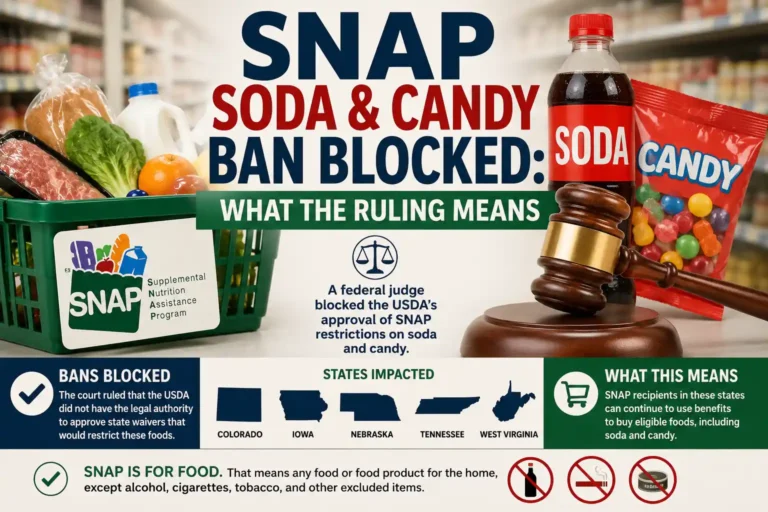
A federal judge has blocked the USDA’s approval of SNAP restrictions that would have limited the purchase of soda and candy in Colorado Iowa Nebraska Tennessee and West Virginia and more are coming. The ruling said the agency did not have the legal authority to approve those state waivers.
The decision matters because it draws a clear line between what Congress has already allowed under SNAP and what a federal agency cannot change on its own. In her ruling Judge Amy Berman Jackson said the government cannot redefine the law to stop SNAP recipients from buying candy and sugary drinks through those state restrictions.
What the ruling changes
Before the court action the five states had been moving forward with restrictions under USDA approved waivers. Those waivers were part of a wider push to limit certain sugary or “junk food” purchases under SNAP. Reuters reported that the court blocked the attempt to enforce those restrictions in the five states named in the case.
That means SNAP shoppers in those states are no longer facing those particular soda and candy bans under the blocked waiver policy.
What SNAP already allows
SNAP is meant to help low income households buy food for the home. USDA guidance says SNAP can be used for eligible foods such as fruits vegetables meats poultry fish breads cereals dairy products snack foods and non alcoholic beverages.
USDA also says SNAP cannot be used to buy alcohol cigarettes and tobacco hot foods vitamins and medicines pet food and other nonfood items.
So the simple idea behind SNAP is this: food benefits are for food. That generally means grocery foods for home use not alcohol cigarettes or other excluded items.
Why the fight mattered
Supporters of the restrictions argued that states should be able to use SNAP rules to encourage healthier eating. Critics said the bans were confusing stigmatizing and harmful for families who already rely on tight food budgets. AP reported that the judge focused on legality and said the restrictions conflicted with Congress’s definition of food.
The case also highlights a bigger question that keeps coming up in food assistance policy: should states be allowed to narrow SNAP purchases even when the federal rules already set clear limits? The court’s answer in this case was no.
What shoppers should know now
For most SNAP recipients the basics have not changed. You can still use benefits on approved groceries and non alcoholic drinks. You still cannot use SNAP on alcohol cigarettes or tobacco and other excluded items. If your state had a soda or candy restriction tied to this blocked waiver policy that restriction is now under legal challenge and not being enforced through the blocked rule.
SNAP rules can still vary in practice when states seek new waivers so checking official state and USDA updates remains important. USDA’s waiver page shows that food restriction waivers have been part of the policy landscape in multiple states.
Bottom line
The court ruling is a major win for SNAP shoppers in Colorado Iowa Nebraska Tennessee and West Virginia because it blocked the soda and candy bans approved through the USDA waiver process. At the same time it did not change the basic SNAP rule that benefits are for eligible food and not for alcohol cigarettes or other excluded items.