
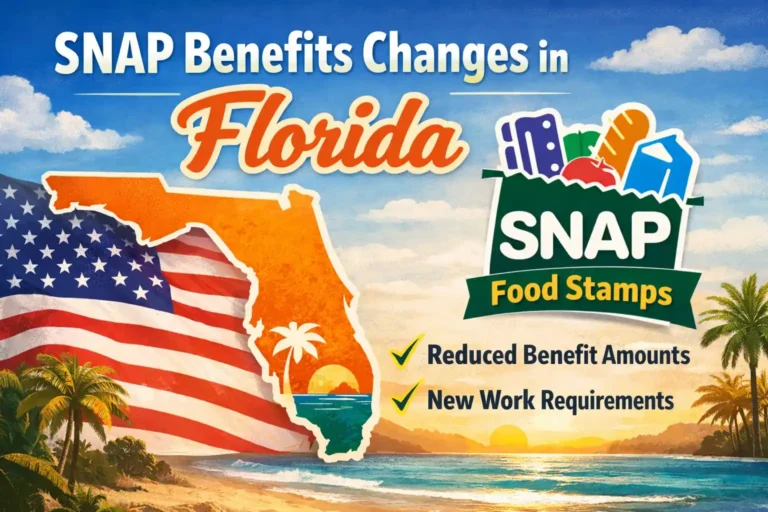
As of January 1, 2026, Florida SNAP (Supplemental Nutrition Assistance Program) recipients are on the cusp of significant changes to what their benefits can purchase. While some early materials, including a widely circulated Walmart poster, suggested restrictions beginning January 1, 2026, official sources confirm the implementation date is April 20, 2026. This delay allows for proper rollout and evaluation planning. The changes are part of a USDA-approved waiver aimed at promoting healthier food choices among low-income families by excluding certain sugary and processed items from SNAP eligibility.
Background and Approval
The Florida SNAP Food Restriction Waiver was approved by the U.S. Department of Agriculture (USDA) on August 4, 2025. This demonstration project amends the definition of “food” under SNAP to exclude specific unhealthy items, aligning with broader national efforts like the Make America Healthy Again (MAHA) initiative to reduce consumption of added sugars and processed foods. Florida is one of over 18 states implementing similar restrictions in 2026, with variations by state (e.g., West Virginia started its soda ban on January 1, 2026).
The waiver applies to all SNAP households in Florida—no opt-out is available—and is designed as a pilot to gather data on health outcomes, shopping behaviors, and program impacts. The Florida Department of Children and Families (DCF) will oversee implementation, with quarterly reports to the USDA during the first year.
Duration: The restrictions will last for two years (April 20, 2026, to April 19, 2028), with the option for up to three one-year extensions, potentially up to five years total, based on evaluation results.
What’s Changing: Restricted Items
Starting April 20, 2026, SNAP benefits (delivered via EBT cards) can no longer be used to purchase:
- Soda (including carbonated soft drinks, diet sodas, and flavored sparkling waters with added sweeteners).
- Energy Drinks (such as those with caffeine and added sugars or stimulants).
- Candy (including chocolate, gummies, hard candies, and other confectionery).
- Prepared Desserts (ultra-processed, shelf-stable items like pre-packaged cakes, cookies, pies, or ice cream novelties; this does not include fresh baked goods or ingredients for home preparation).
These restrictions are intended to encourage purchases of nutrient-dense foods and improve long-term health outcomes for participants, particularly children and families at risk for obesity and related conditions.
Insights from the Attached Walmart Poster
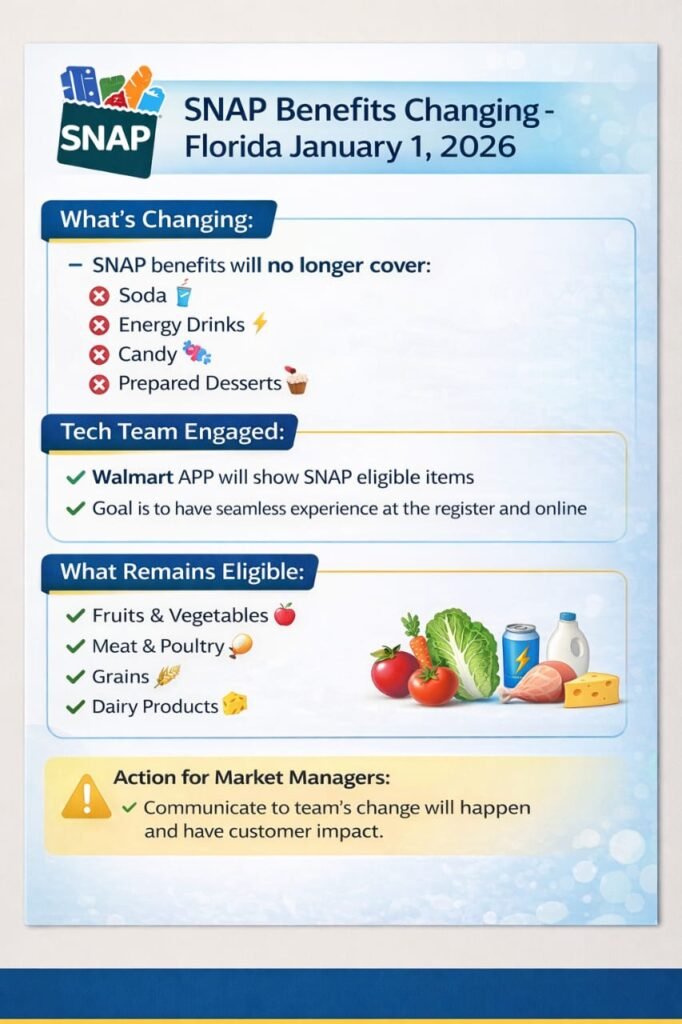
A promotional poster from Walmart, dated for Florida’s changes on January 1, 2026, highlights the upcoming restrictions and emphasizes retailer preparations. The poster states:
- What’s Changing: SNAP benefits will no longer cover soda, energy drinks, candy, and prepared desserts.
- Tech Team Engaged: The Walmart app will display SNAP-eligible items, with the goal of a seamless experience at registers and online.
- What Remains Eligible: Fruits & vegetables, meat & poultry, grains, and dairy products.
- Action for Market Managers: Communicate the change to teams, noting it will impact customers.
Although the poster lists January 1, 2026, as the date, this appears to be an internal preparation timeline or error, as official state and USDA sources confirm April 20, 2026. Walmart’s involvement underscores how retailers are updating systems to flag ineligible items at checkout, helping prevent accidental purchases.
What Remains Eligible
SNAP benefits will continue to cover a wide range of nutritious foods, including:
- Fruits and vegetables (fresh, frozen, canned).
- Meat, poultry, and fish.
- Grains (bread, cereal, rice, pasta).
- Dairy products (milk, cheese, yogurt).
- Other staples like eggs, beans, nuts, and seeds.
The focus remains on household food for home consumption, excluding hot foods, alcohol, vitamins, and non-food items.
Impact on Recipients and Retailers
For SNAP users (over 3 million in Florida), this may require adjusting shopping habits, potentially increasing out-of-pocket spending on restricted items or shifting to healthier alternatives. The USDA will track effects through surveys, dietary recalls, transaction data, and health metrics to assess if the changes reduce consumption of added sugars and improve nutrition.
Retailers like Walmart, Publix, and others must comply by updating point-of-sale systems, notifying customers, and submitting compliance attestations. Non-compliance could result in warnings or loss of SNAP authorization. The state plans communications like website updates and centralized support for questions.
How to Apply or Check SNAP Eligibility and Benefits
- Apply: Through the Florida DCF ACCESS portal (myflorida.com/accessflorida) or local offices.
- Check Eligible Items: Use retailer apps (e.g., Walmart app filters for SNAP), the ebtEDGE app, or call 1-888-356-3281 for balance and transaction info.
- More Info: Visit healthysnap.myflfamilies.com or fns.usda.gov/snap for updates.
These changes reflect a push toward healthier eating, but critics argue they limit choice for low-income families. If you’re a SNAP recipient, plan ahead for the April 20 rollout.