
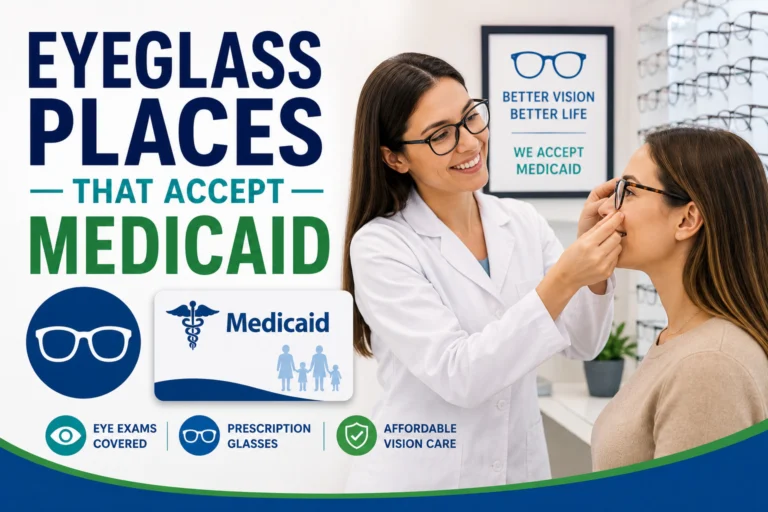
If you’re searching for eyeglass places that accept Medicaid, you’re not alone. Millions of Americans rely on Medicaid for essential healthcare, including vision services. Depending on your state’s Medicaid program, you may qualify for eye exams, prescription glasses, and other vision-related benefits at little or no cost.
This guide explains where you can use Medicaid for eyeglasses, what vision benefits are typically covered, and how to find a participating provider near you.
Does Medicaid Cover Eyeglasses?
Yes, Medicaid may cover eyeglasses, but benefits vary by state. Federal law requires Medicaid to provide comprehensive vision services for eligible children through the Early and Periodic Screening, Diagnostic, and Treatment (EPSDT) benefit. Adult vision coverage, however, is optional and differs from one state to another.
Coverage often depends on:
- Your state’s Medicaid program
- Your age
- Medical necessity
- Your Medicaid managed care plan
- The participating vision provider
Always verify your benefits before scheduling an appointment.
What Vision Services Does Medicaid Typically Cover?
Many Medicaid plans may include:
- Comprehensive eye exams
- Vision screenings
- Prescription eyeglasses
- Standard eyeglass lenses
- Basic eyeglass frames
- Lens replacements
- Repairs or adjustments
- Pediatric vision care
Some plans also cover medically necessary specialty lenses or additional vision treatments.
Eyeglass Places That May Accept Medicaid
Many types of vision care providers participate in Medicaid, although availability varies by state and insurance plan.
Independent Optometrists
Many local optometrists accept Medicaid and offer eye exams, prescriptions, and eyeglasses.
Benefits
- Personalized care
- Wide frame selection
- Routine eye health monitoring
- Convenient scheduling
Optical Retail Stores
Some national and regional optical retailers accept Medicaid plans in certain locations. Participation depends on the store and your state’s Medicaid program.
Services may include:
- Eye exams
- Prescription glasses
- Children’s eyewear
- Lens upgrades (if covered)
- Frame fittings
Always call ahead to confirm participation.
Community Health Centers
Federally funded community health centers often provide affordable vision services and may accept Medicaid.
These centers frequently offer:
- Eye exams
- Vision screenings
- Glasses ordering
- Referrals to specialists
Hospital Eye Clinics
Many hospitals with ophthalmology or optometry departments accept Medicaid for medically necessary vision care.
University Eye Clinics
Optometry schools and university vision clinics often provide comprehensive eye care at reduced costs while accepting Medicaid plans.
How to Find Eyeglass Places That Accept Medicaid
Finding a participating provider is easier when you follow these steps.
1. Contact Your Medicaid Plan
Your Medicaid managed care organization can provide an updated list of participating eye care providers and optical shops.
2. Use Your Provider Directory
Most Medicaid plans offer searchable online directories where you can filter by:
- Optometrist
- Ophthalmologist
- Optical shop
- Vision center
3. Ask Your Primary Care Provider
Your doctor may recommend trusted vision providers who participate in Medicaid.
4. Call Before Visiting
Always confirm:
- They currently accept your Medicaid plan
- Eye exam coverage
- Eyeglass benefits
- Available frame options
- Appointment availability
What Eyeglasses Does Medicaid Usually Cover?
Coverage varies, but Medicaid commonly includes:
- Basic prescription lenses
- Standard frames
- Single-vision glasses
- Children’s glasses
- Lens replacements when medically necessary
Some plans may allow upgrades if you pay the difference.
What May Not Be Covered?
Certain items may require additional payment, including:
- Designer frames
- Premium coatings
- Transition lenses
- Blue-light filtering lenses
- Cosmetic tinting
- Luxury upgrades
Coverage depends on your Medicaid benefits.
Documents to Bring
Before your appointment, bring:
- Medicaid ID card
- Photo identification
- Current eyeglasses
- Prescription (if available)
- Referral (if required)
- List of medications
- Medical history
Tips for Choosing an Eyeglass Provider
When selecting a provider, consider:
- Medicaid participation
- Available frame selection
- Eye exam availability
- Convenient location
- Appointment wait times
- Patient reviews
- Experienced staff
- Children’s vision services
When Should You Schedule an Eye Exam?
Regular eye exams help detect vision changes and identify eye diseases early.
Schedule an appointment if you experience:
- Blurred vision
- Frequent headaches
- Eye pain
- Difficulty reading
- Night vision problems
- Double vision
- Flashes or floaters
- Diabetes-related vision changes
Early diagnosis can help protect your eyesight.
Frequently Asked Questions
Does every eyeglass store accept Medicaid?
No. Participation varies by location, provider, and state Medicaid program.
Can adults get free glasses through Medicaid?
Some state Medicaid programs cover adult eyeglasses, while others offer limited or no routine vision benefits.
Are children’s glasses covered?
Yes. Medicaid generally provides comprehensive vision benefits for eligible children, including eye exams and prescription glasses.
Can I choose any frames?
Most Medicaid plans cover a selection of standard frames. Designer or premium frames may require an additional payment.
How often will Medicaid pay for new glasses?
The replacement schedule varies by state and Medicaid plan. Many programs cover new glasses after a specific period or when there is a significant change in prescription.
Final Thoughts
Finding eyeglass places that accept Medicaid can make quality vision care more affordable for individuals and families. Many local optometrists, community health centers, hospital eye clinics, and participating optical retailers accept Medicaid, though benefits and provider networks vary by state.
Before scheduling your visit, confirm your vision benefits, verify that the provider accepts your Medicaid plan, and ask about covered eye exams, glasses, and frame options. With the right provider, you can receive the eye care and prescription eyewear you need while keeping out-of-pocket costs low.