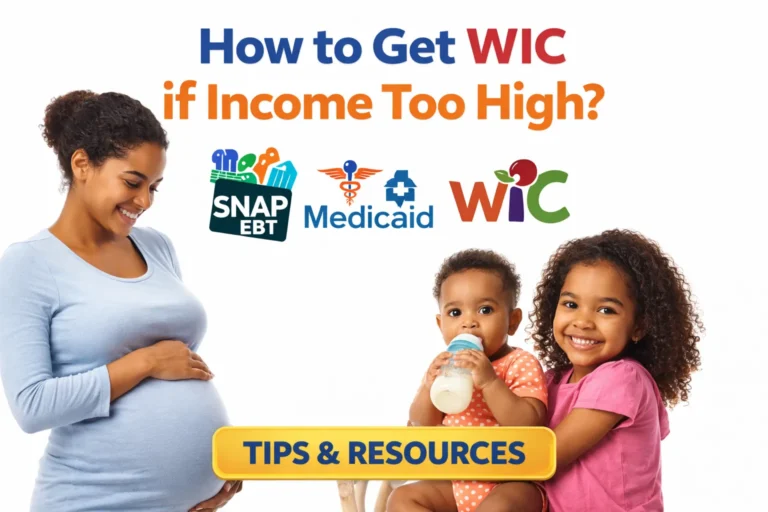
If you already get other government help, like Medicaid or the Supplemental Nutrition Assistance Program (SNAP), you might still be able to get WIC even if you make more money.
If you are a foster child or live with someone who is a foster child, you can also qualify. Also, pregnant women and kids under 5 may be able to get WIC benefits, no matter how much money they make.
You continue to meet nutritional risk and categorical eligibility, but you also need to meet income (or adjunctive) requirements. Foster kids are automatically eligible, but they still need to have their income and nutritional risk checked.
A lot of people think that going over the normal income limits automatically disqualifies them, but that’s not always true. Federal rules include things like automatic eligibility through participation in other assistance programs, which can qualify families even if their gross income is higher than the 185% federal poverty level guideline.
Also, almost all of the people who apply meet the nutritional risk requirement during screening. This article talks about who can get WIC benefits and how to do so.
Key Points
- To be eligible for WIC, you must meet three requirements: you must be in one of the following categories: pregnant, postpartum, breastfeeding women; infants; children under 5; your income must be at or below 185% of federal poverty guidelines or automatically through other programs; and you must be at nutritional risk (which is almost always found during free screening).
- If you get Medicaid, SNAP, or TANF, you automatically meet the income requirements for WIC (Women, Infants, and Children). This makes it easier for you to qualify, even if your stated income seems high for WIC’s usual limits. However, you still need to meet other WIC requirements, such as residency and nutritional risk.
- The amount of money you make is based on your gross household income, but for pregnant applicants, the size of their household includes unborn children.
- There is no cost to check for nutritional risk, which includes common problems like being underweight, anaemic, or not getting enough food.
- If you are turned down because of your income, you can appeal or reapply if your situation changes. If WIC isn’t available, look into other options like SNAP.
- Always apply; a lot of families who think they make too much money qualify through automatic eligibility or screening.
Requirements to Be Eligible for WIC
The Special Supplemental Nutrition Program for Women, Infants, and Children (WIC) helps low-income women, infants, and children by giving them extra food, teaching them about nutrition, and helping them breastfeed. You must meet certain income and residency requirements to be able to get WIC.
1. Requirements for Income
Your household income must be at or below 185% of the federal poverty level in order to qualify for WIC. Every year, the federal poverty level changes.
The federal poverty level for a family of four in 2023 is $35,090.
2. The WIC website has information about the income limits for WIC in your state.
- Learn more about healthy food, health, and groceries.
- Games for the whole family
- Get vitamins and other supplements
- Panera Bread, Herbs, and Vegetables
- Almond milk and vegetables
Requirements for Residency
You must live in the United States, the District of Columbia, Puerto Rico, Guam, the Virgin Islands, or American Samoa to be eligible for WIC.
3. Other Requirements for Eligibility
You must also meet one of the following eligibility requirements, in addition to having a certain income and living in a certain area:
- You are expecting a baby.
- You are nursing a baby who is less than a year old.
- You have a child younger than five who is at risk of not getting enough food.
- Many things can help you figure out if you are at nutritional risk, such as:
- Low weight at birth
- Birth too soon
- Iron deficiency and failure to thrive
How to Apply
Even if your income looks too high on paper, you should still apply. Many people find that they automatically qualify.
- Find your local agency: Go to fns.usda.gov/wic or the website of your state health department to find clinics. A lot of them let you apply or prescreen online.
- Apply Early: Call the clinic to make an appointment (in person, over the phone, or online in many places). Bring everyone who is applying.
- Use Automatic Eligibility: If you are on Medicaid, SNAP, or TANF, bring proof. These programs often speed up approval without needing to check your income in detail.
- Document the household correctly by listing everyone who lives there and shares costs. For each pregnant woman, add one (or more for twins).
- If you are turned down, reapply. Things can change (for example, you could lose your job or get pregnant). You can appeal decisions through the clinic.
- Check for differences between states: Some states get Medicaid updates sooner or have presumptive eligibility for short-term benefits.
- No Charge to Apply: The process doesn’t cost anything, and clinics help with missing paperwork.
How to Get Ready for Your WIC Appointment
During appointments, we check to see if you qualify, take your measurements, and talk about your diet. Get ready to make the process easier:
1. Proof of Identity:
Each applicant must show proof of identity, such as a driver’s license, birth certificate, or immunisation records.
2. Proof of address:
A utility bill, a lease, or mail with your name on it.
Recent pay stubs (within 30 days), tax returns, or letters for unemployment or child support are all examples of proof of income. If you don’t have any income, a self-declaration might be enough for a while.
Medicaid, SNAP, or TANF cards or letters are proof of other benefits that make you automatically eligible.
3. Records of Health:
Bring kids and babies; staff will weigh and measure them and check haemoglobin (iron levels) for kids 9 months and older.
If you need a formula, you must bring a doctor’s note.
4. What to Expect:
Staff will be friendly and talk about nutrition. If you qualify, they will give you an eWIC card and make food packages that fit your needs (for example, formula, cereals, and fruits).
Clinics usually give people time to get missing documents or use other options.
Benefits of the WIC Program
1. Better Health Outcomes:
WIC has been shown to lower the rates of low birth weight, preterm birth, and infant death, which leads to better pregnancy outcomes. It also helps kids grow and develop in a healthy way, which lowers the risk of obesity, anaemia, and other nutrition-related problems in kids.
2. Support for Breastfeeding:
WIC’s focus on helping women breastfeed has led to more women starting to breastfeed and continuing to do so for longer, which is good for the health of both mothers and babies in the long term.
Breastfed babies are less likely to get infections, allergies, and long-term illnesses. Breastfeeding mothers are also less likely to get breast and ovarian cancer.
3. Better Eating Habits:
WIC participants are more likely to eat the right amounts of fruits, vegetables, whole grains, and other foods that are high in nutrients, which helps them get better nutrition overall.
4. Early Intervention
WIC is an important early intervention program because it helps babies and young children. It helps you develop healthy eating habits that will last your whole life.
Moreover, it keeps you from getting nutrition deficiencies and lowers your risk of getting chronic diseases later in life that are related to your diet.
5. Economic Benefits:
Research indicates that participation in WIC diminishes healthcare expenses by enhancing birth outcomes and decreasing the prevalence of medical complications associated with inadequate nutrition.
The program has also been linked to better school performance and brain development in kids.
Final Thoughts
WIC helps millions of families every year by meeting their nutritional needs at important times in their lives. Its flexible rules, especially the fact that people can automatically qualify through programs like Medicaid and SNAP, mean that many people who think their income is “too high” actually do qualify.
Don’t disqualify yourself; call your local WIC clinic today for a free evaluation. Even if WIC isn’t right for you, staff can help you find other resources, like food banks or extra SNAP benefits.
Putting nutrition first from an early age is good for the health of both parents and children for the rest of their lives. Apply now; you might be pleasantly surprised.